Curved Kitchen Island Ideas: 9 Soft, Smart Looks
Curved kitchen island ideas work because a rounded end softens the hardest-working block in the room — no sharp corner to bump into, one extra seat around the arc, and a walkway that feels wider in a small kitchen. The nine looks below run from a rounded countertop to a full custom fluted base, with costs and seating measurements.
Every kitchen island I have ever lived with has had one problem: the corner. You catch your hip on it carrying a hot pan, the kids run into it, and the stool at the end never quite fits. A curved kitchen island fixes all three at once, and it looks softer doing it — the big rectangular block starts to feel like furniture instead of a counter you are stuck with.
I love the curved island trend because it is not just a pretty shape. The arc genuinely seats more people, the walkway feels wider, and the room reads calmer. The nine ideas below start with the cheapest way in — rounding one countertop end — and build up to the full custom looks the 2027 kitchen forecasts keep flagging.
1 Rounded-End Quartz Curved Kitchen Island Ideas
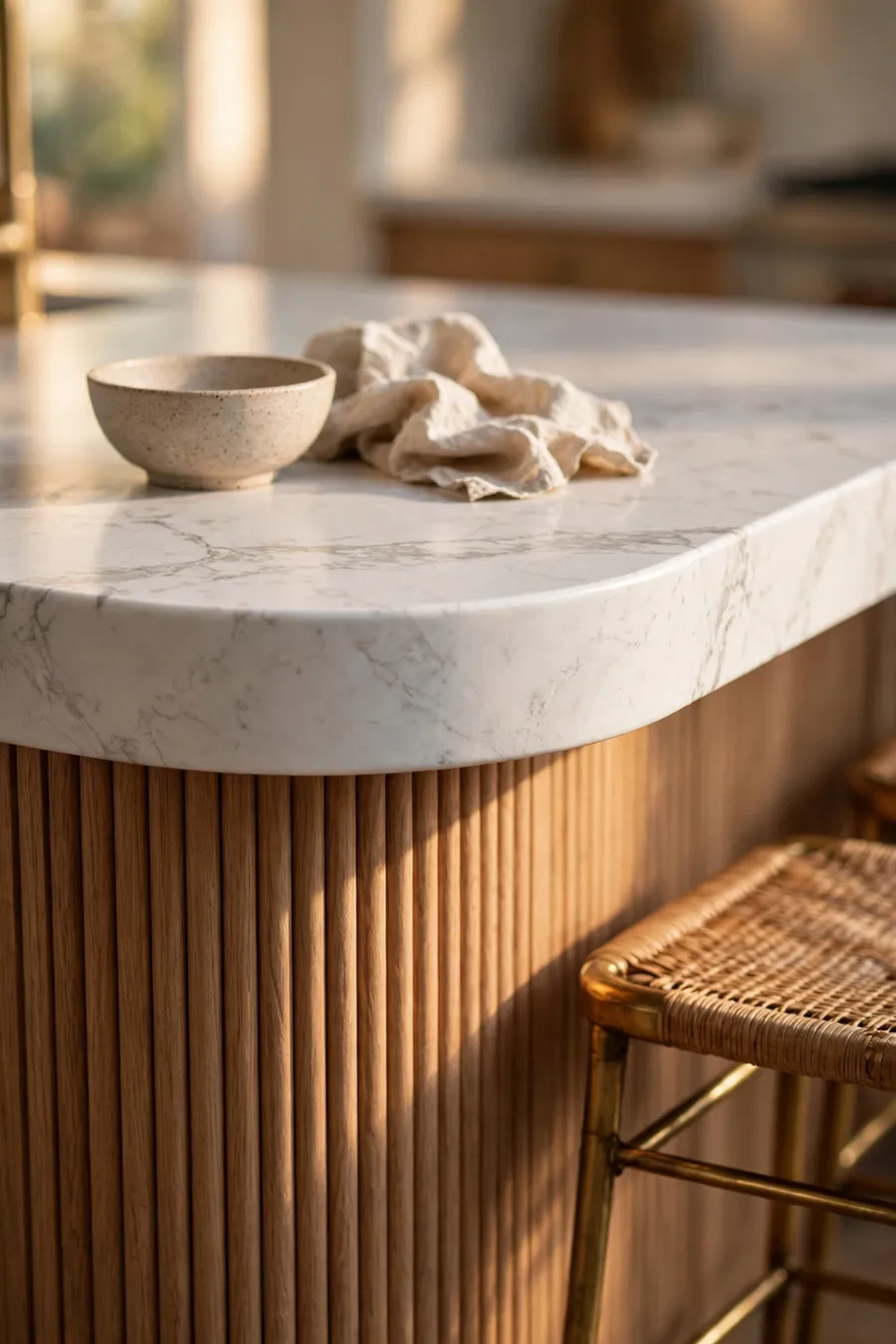
The simplest curved kitchen island idea is also the cheapest: keep your existing island base and round one end of the countertop. A fabricator cuts the quartz or butcher block with a 6 to 12 inch radius on the seating end, and suddenly the corner is gone. A rounded quartz top adds about $300 to $800 over a square-edged slab the same size. Pair the curve with a warm white quartz, cream cabinets, and two backless stools, $80 to $180 each, tucked around the arc. This is the pick if you already have an island you like and just want the sharp corner gone.
2 Fluted Oak Base Curved Kitchen Island Ideas
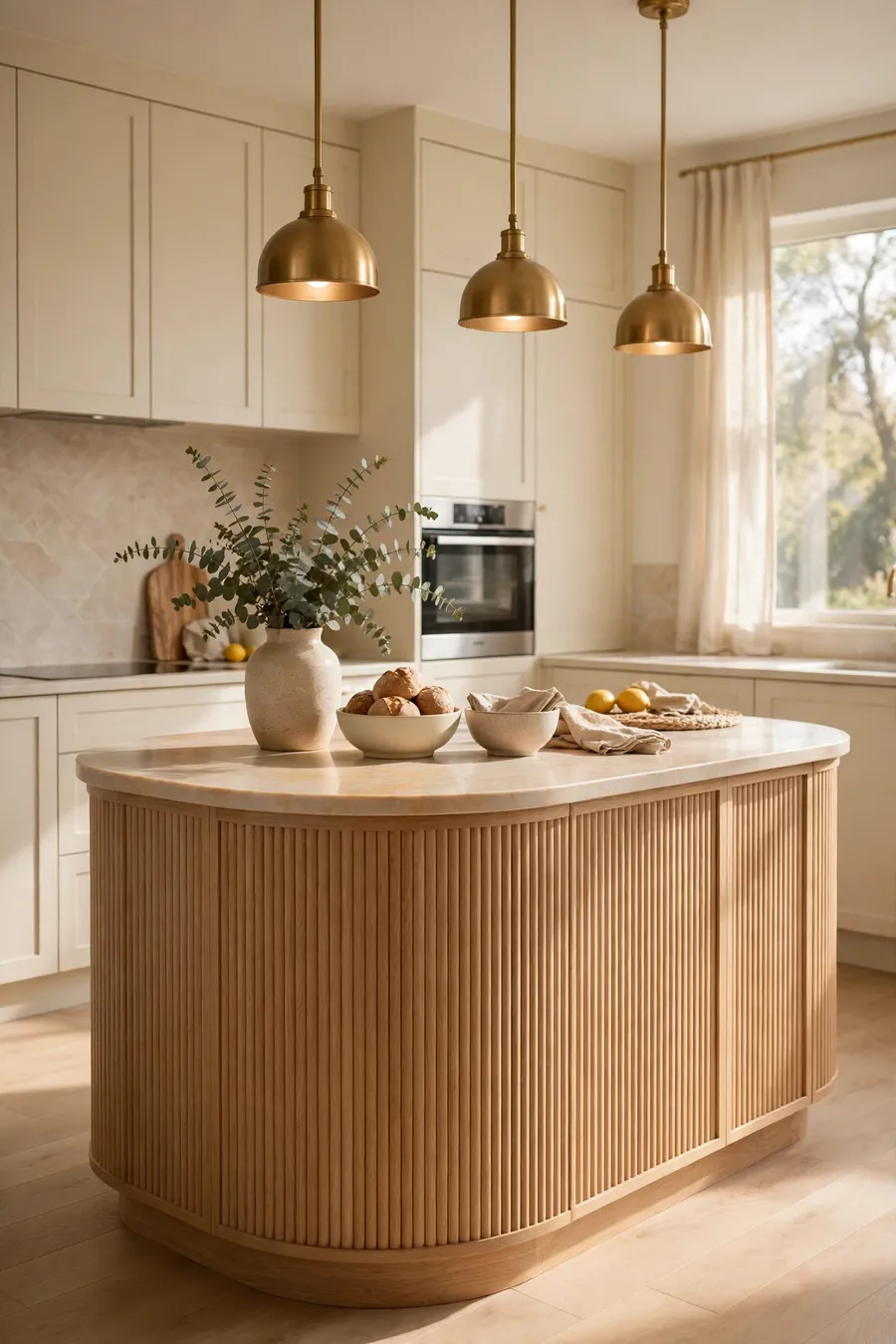
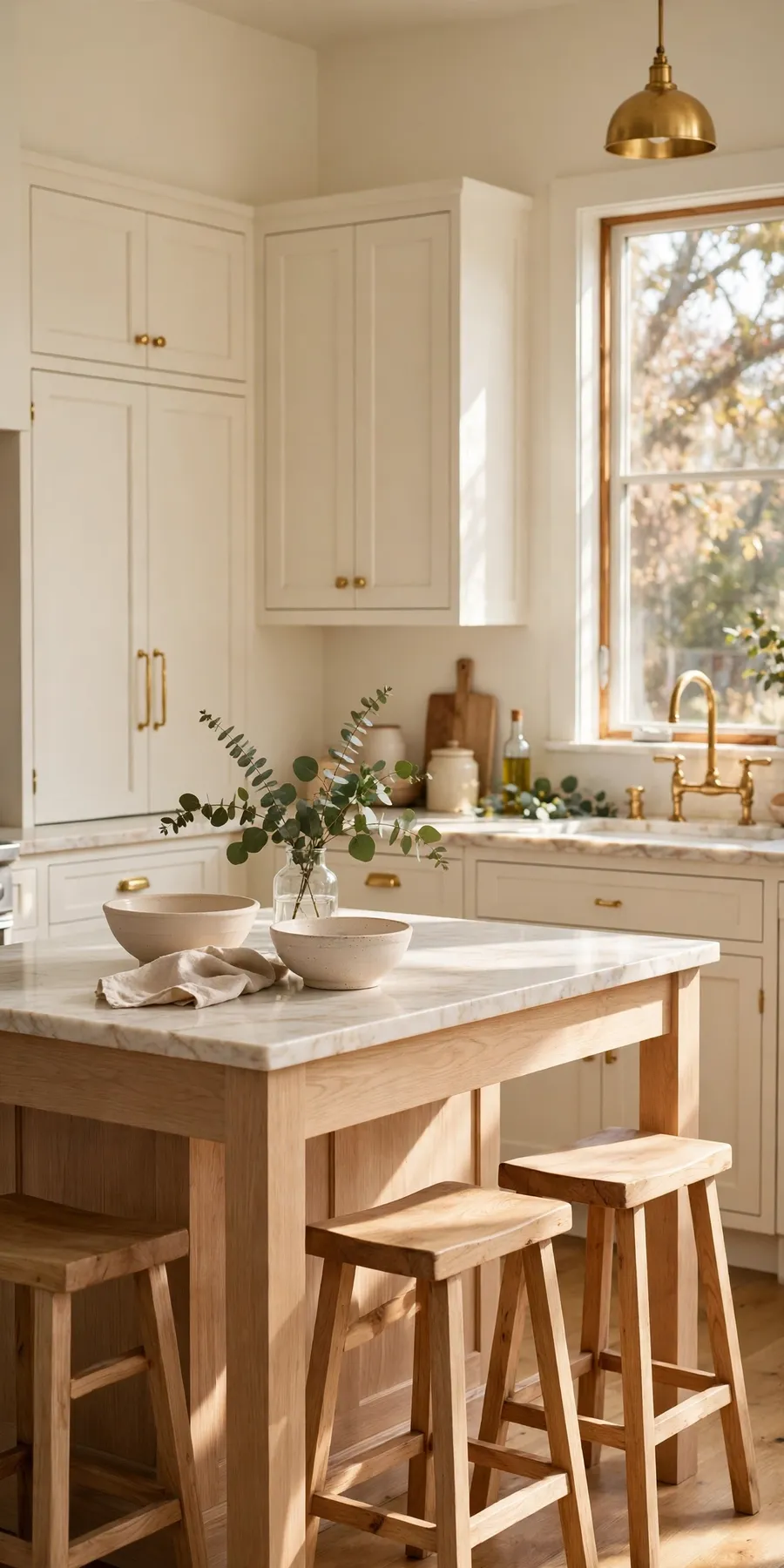
A fluted oak base is the look that made curved islands famous. Thin vertical oak slats wrap around the curved end, and the fluting hides the join so the curve reads as one smooth piece. A custom fluted base runs $1,200 to $2,500 on top of the island itself, depending on the wood — white oak costs more than pine, and a clear matte finish shows the grain best. Keep the countertop pale — warm white quartz or light butcher block — so the wood does the talking. Brass pendants, $60 to $140 each, hung low over the curve, finish it. Pick this one if the kitchen is where you entertain.
Pro tip: Before you order anything curved, tape the shape on the floor. Mark the island footprint with painter's tape, then walk the route you take from the fridge to the sink to the stove, carrying a full laundry basket. If the taped curve gives you a clear path and the square corner does not, the curve is worth paying for. Tape is free; a wrong island is not.
3 Small Kitchen Curved Kitchen Island Ideas
A curved island earns its keep in a small kitchen, where every inch of walkway matters. The rule is to round only the end you walk past and keep the island narrow — 24 to 30 inches deep instead of the usual 36. A 36-inch walkway around a rounded end feels generous, where the same walkway around a square corner feels tight. Keep the 12-inch overhang only on the seating curve, so knees fit and stools tuck in. Backless stools, $60 to $120 each, slide fully under the counter and disappear when dinner is over. A small curved island costs about the same as a small straight one, $2,500 to $4,000, because the savings on size offset the curve.
4 Curved Kitchen Island with Seating for Four Ideas
A curve seats more people than a straight edge, and that is the real reason to choose one. A square end fits one stool; a rounded end fits two, because the stools fan around the arc instead of lining up in a row. Allow 24 inches of width per stool along the curve, and plan on three stools along the long side plus two around the end for a family of five. Counter-height stools are 24 to 26 inches tall for a 36-inch island; go bar height, 28 to 30 inches, only with a raised 42-inch bar section. Swivel seats are worth the extra $20 to $40 each — nobody wants to climb over a fixed stool. Budget $350 to $700 for four.
5 Waterfall-End Curved Kitchen Island Ideas
A waterfall end takes the countertop material down the side of the island to the floor, and on a curved island it looks like the whole thing was carved from one block. Ask the fabricator to curve the waterfall edge itself, so the slab bends instead of dropping in a hard right angle. A curved waterfall end in quartz adds $800 to $1,500 over a standard slab, and it suits islands in open-plan kitchens, where the end is on show from the living room. Keep the rest of the kitchen quiet — flat cream cabinets, one open shelf, a single vase of eucalyptus, $8 to $15. The waterfall end is the statement; everything else stays calm.
6 Furniture-Style Curved Kitchen Island Ideas
Furniture-style islands are the other half of the 2027 forecast, and they pair perfectly with a curve. Instead of a cabinet box that runs to the floor, the island stands on turned legs or a plinth base, with a rounded apron and a countertop that overhangs like a table. Paint it a soft color — sage, dusty blue, or warm greige — and it reads like a sideboard that happens to have a sink in it. Custom, it costs $3,500 to $6,500 — or convert a vintage sideboard for far less: add a butcher-block top, $200 to $400, round the corners with a jigsaw, and screw on casters, $15 to $30 a set, so it rolls. This is the island to pick if your kitchen doubles as the dining room.
7 Two-Tone Curved Kitchen Island Ideas
Painting the curved island a different color from the rest of the kitchen is the fastest way to make the shape the star. A deep green, navy, or warm terracotta base against cream perimeter cabinets makes the curve read even softer, because your eye follows the color around the bend. Use cabinet paint, $50 to $80 a gallon, in satin, so the curve wipes clean — flat paint on an island base shows every fingerprint. Keep the countertop pale and repeat the island color once more in the room — a cushion, a vase, a row of tiles — so it looks planned, not random. One gallon covers a standard island twice over.
8 Curved Kitchen Island with Open Shelving Ideas
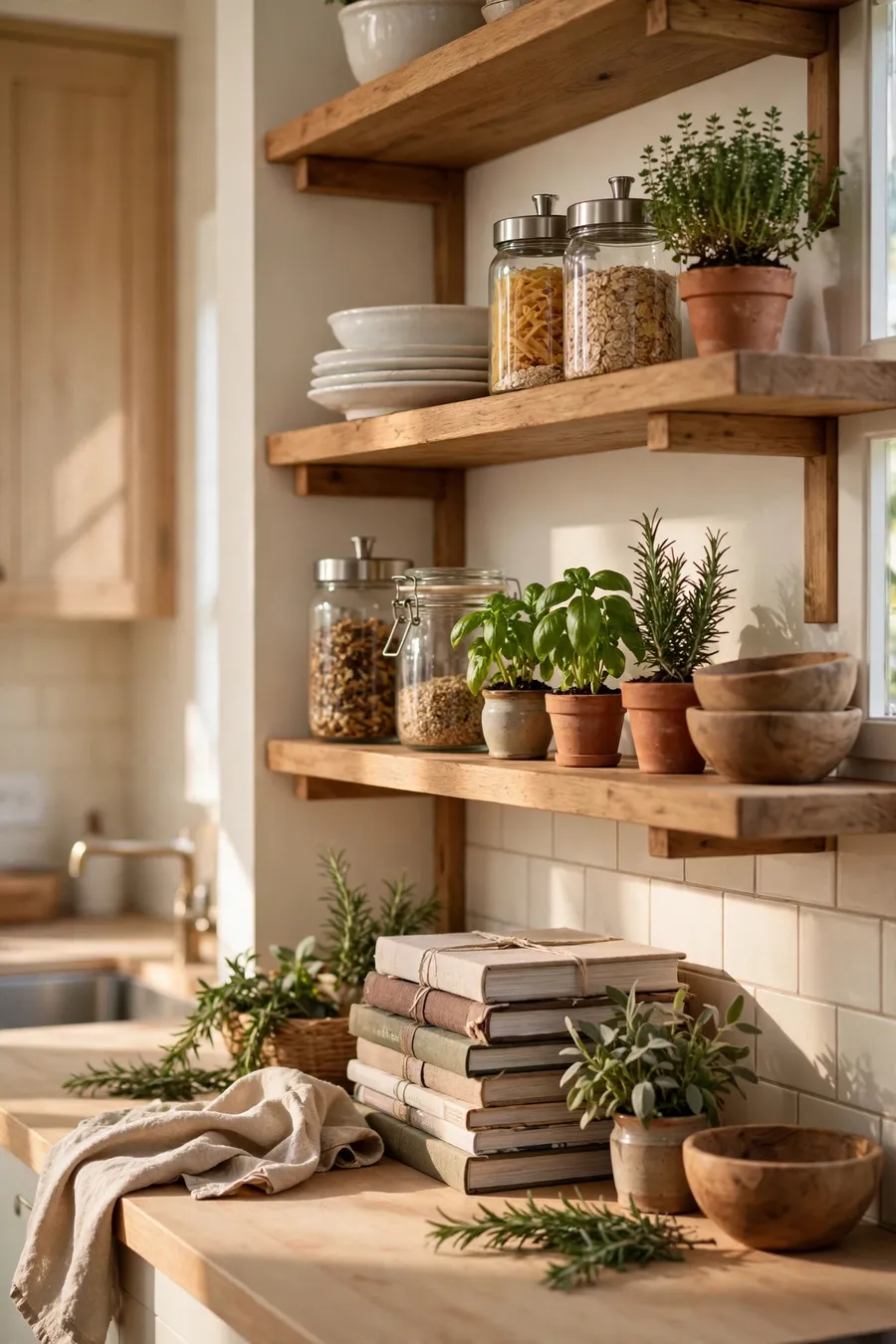
Fit one or two curved shelves into the rounded end, about 12 inches deep, for the pretty things — ceramic bowls, $15 to $40 each, a stack of cookbooks, a small plant. The shelves cost $150 to $400 to build into a new island, or you can add a freestanding curved shelf unit against the end for $80 to $200. Keep it to five or six pieces and leave one shelf half empty — an overfilled curved shelf looks cluttered fast, because the arc catches the eye from every angle.
9 Budget Curved Kitchen Island Ideas
A ready-made island cart with a rounded butcher-block top starts around $400 to $900, round ends built in. If you already own a straight island, round the countertop corners yourself: mark a 6-inch radius with a plate, cut with a jigsaw, and sand the edge smooth — a weekend job that costs under $50 in sandpaper and sealant. If the kitchen is tiny, add a wall-mounted half-round breakfast bar instead of a full island: $150 to $350 in butcher block and brackets, seats two, takes up no floor space. The curve is the idea, not the price tag.
Budget breakdown: Rounded quartz countertop upgrade ($500) + two backless stools ($240) + two brass pendants ($200) = about $940 to soften an existing island. A full custom curved island with a fluted oak base and quartz waterfall end runs $5,000 to $8,000 installed — start with the countertop and stools, and you get most of the look for a tenth of the price.
The Bottom Line
A curved kitchen island is one of those rare trends that is both softer and smarter than what it replaces. Round the end you walk past, give each stool 24 inches along the arc, and let the curve do the work — fewer bumps, more seats, and a kitchen that feels like a room instead of a corridor. Start with the countertop if the budget is tight; the fluted base can wait until the curve has proved itself.
For the rest of the kitchen, these kitchen open shelving decor ideas show how to style the shelves around a new island.
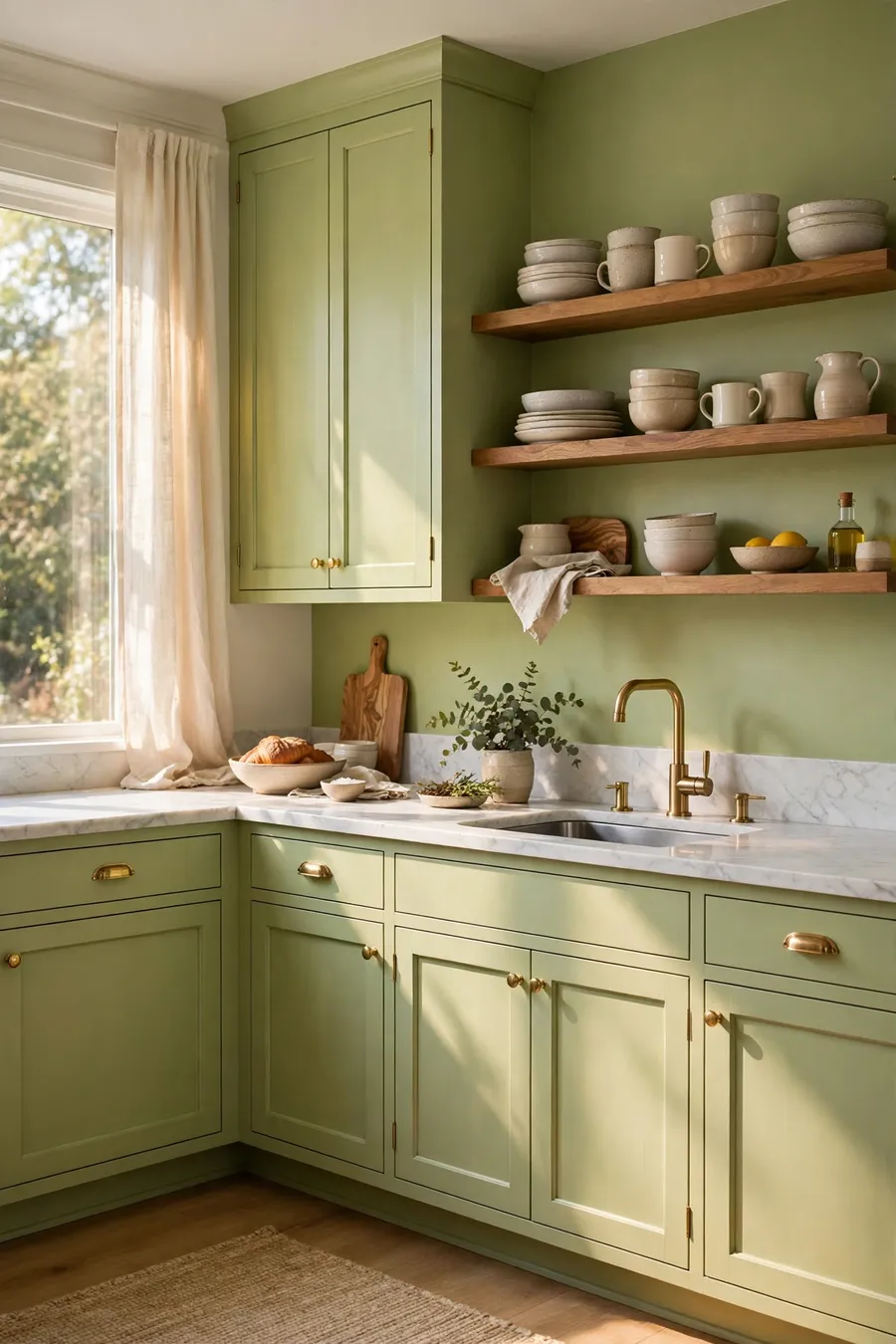
And if the island is going sage or green, these celery paint color kitchen ideas take the same soft green across the whole room.
Related Ideas
Frequently Asked Questions
Are curved kitchen islands practical or just decorative?
Curved kitchen islands are genuinely practical. A rounded end removes the sharp corner people bump into in tight kitchens, and the curve seats one extra person compared with a square end of the same width, because stools fan around the arc. The trade-off is a small loss of flat counter space at the curve, and curved cabinetry costs 10 to 20 percent more than a straight run.
How much does a curved kitchen island cost?
A curved kitchen island costs roughly $2,500 to $8,000 installed, depending on size and finish. A stock island with a rounded-end countertop starts near $2,500, while a custom island with a curved fluted wood base and quartz waterfall ends runs $5,000 to $8,000. A rounded quartz countertop alone adds about $300 to $800 over a square-edged slab of the same size.
Do curved kitchen islands work in a small kitchen?
Yes — a curved kitchen island often works better in a small kitchen than a rectangular one. The rounded end needs less clearance to walk around, so a 36-inch walkway feels fine where a square corner would catch hips and elbows. Keep the island narrow, around 24 to 30 inches deep, round only the end you walk past, and choose backless stools that tuck fully under the overhang.
What stools work best with a curved kitchen island?
Backless stools with a swivel seat work best with a curved kitchen island, because they slide around the arc and tuck under the overhang without fighting the curve. Allow about 24 inches of width per stool along the curve and a 12-inch counter overhang for knees. Counter-height stools are 24 to 26 inches tall for a 36-inch island; bar-height stools are 28 to 30 inches for a 42-inch raised bar.