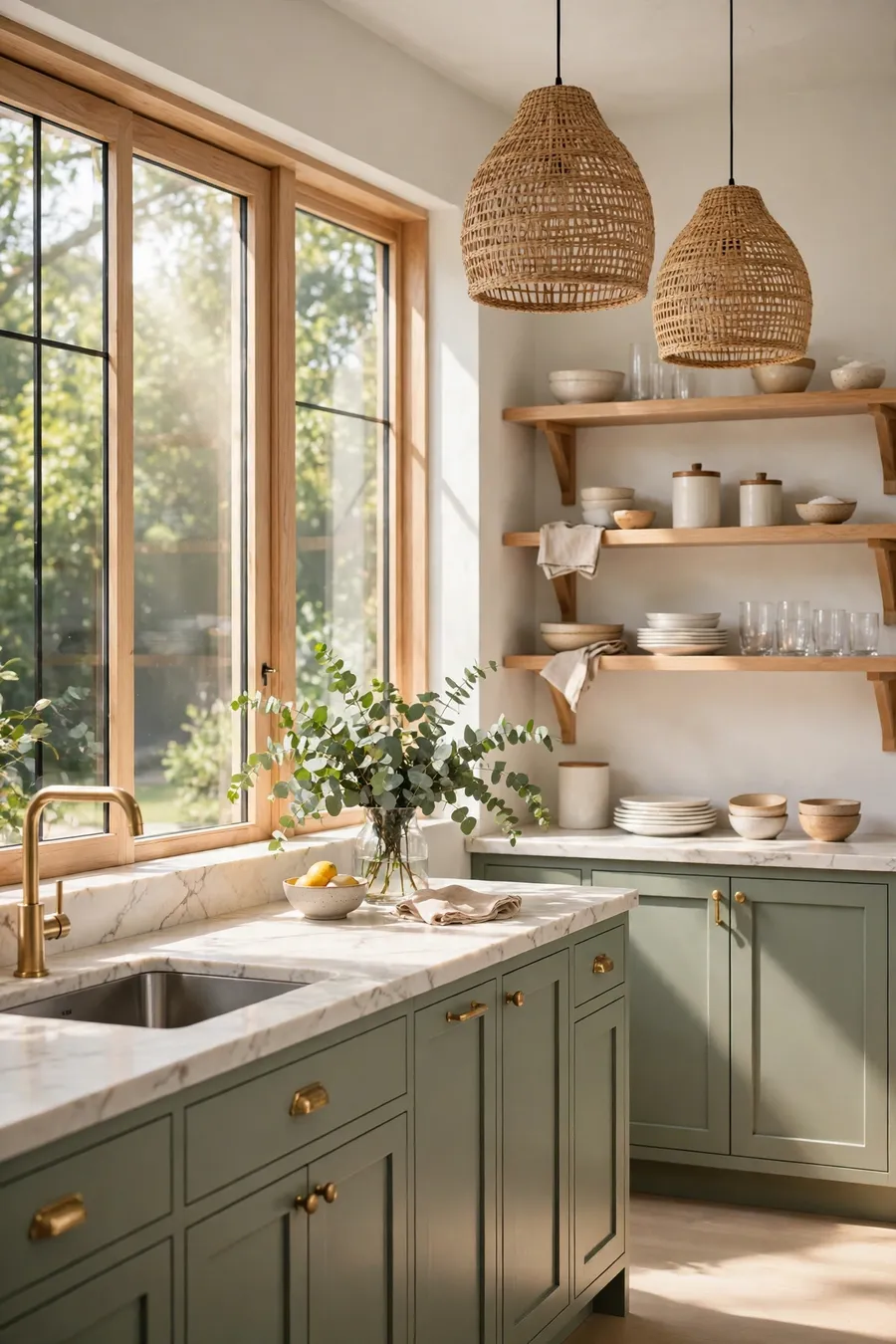
Green Kitchen Cabinet Ideas: 10 Earthy Looks
Green kitchen cabinet ideas work because green is the rare color that feels both calm and alive — pale sage reads almost like a neutral, while deep forest green turns a plain kitchen into a room with real presence. The ten looks below run from soft sage to moody olive, with exact paint shade names, hardware pairings, and costs.
White kitchens had a long run, and honestly, I get why. They are safe. But safe gets boring fast, and green is the color people keep reaching for when they want a kitchen that actually feels like theirs. Searches for green kitchen ideas are up 40% year over year, and it shows — sage, olive, and forest green cabinets are everywhere in the 2027 forecasts.
The trick with green is picking the right depth for your light. A north-facing kitchen needs a warmer, yellower green; a sunny one can handle the deep, smoky shades. The ten ideas below cover the full range, and every one names the paint shade, so you can walk into the store with a name instead of a guess.
1 Sage Green Kitchen Cabinet Ideas
Sage is the green to start with if you have never painted a cabinet in your life. It sits halfway between gray and green, so it never screams "color" — it just makes the kitchen feel warmer. Farrow & Ball Green Smoke is the shade everyone photographs, but Benjamin Moore Saybrook Sage and Sherwin-Williams Evergreen Fog give you the same soft look for less money, about $50 to $70 a gallon. Pair sage cabinets with warm white marble, unlacquered brass pulls, and pale oak shelves, and the whole room reads calm and collected. This is the pick if you want color without commitment.
2 Deep Forest Green Kitchen Cabinet Ideas
Forest green is the opposite move — full drama, no apology. A deep shade like Farrow & Ball Studio Green or Benjamin Moore Forest Floor turns plain Shaker cabinets into something that looks custom-built, and it makes white countertops pop. The rule here is to keep everything else light: white or warm-white walls, a pale stone counter, and brass hardware, $8 to $18 a pull. Paint the whole kitchen this deep only if you have a window or two; in a windowless galley, keep forest green to the lower cabinets and let the uppers stay cream.
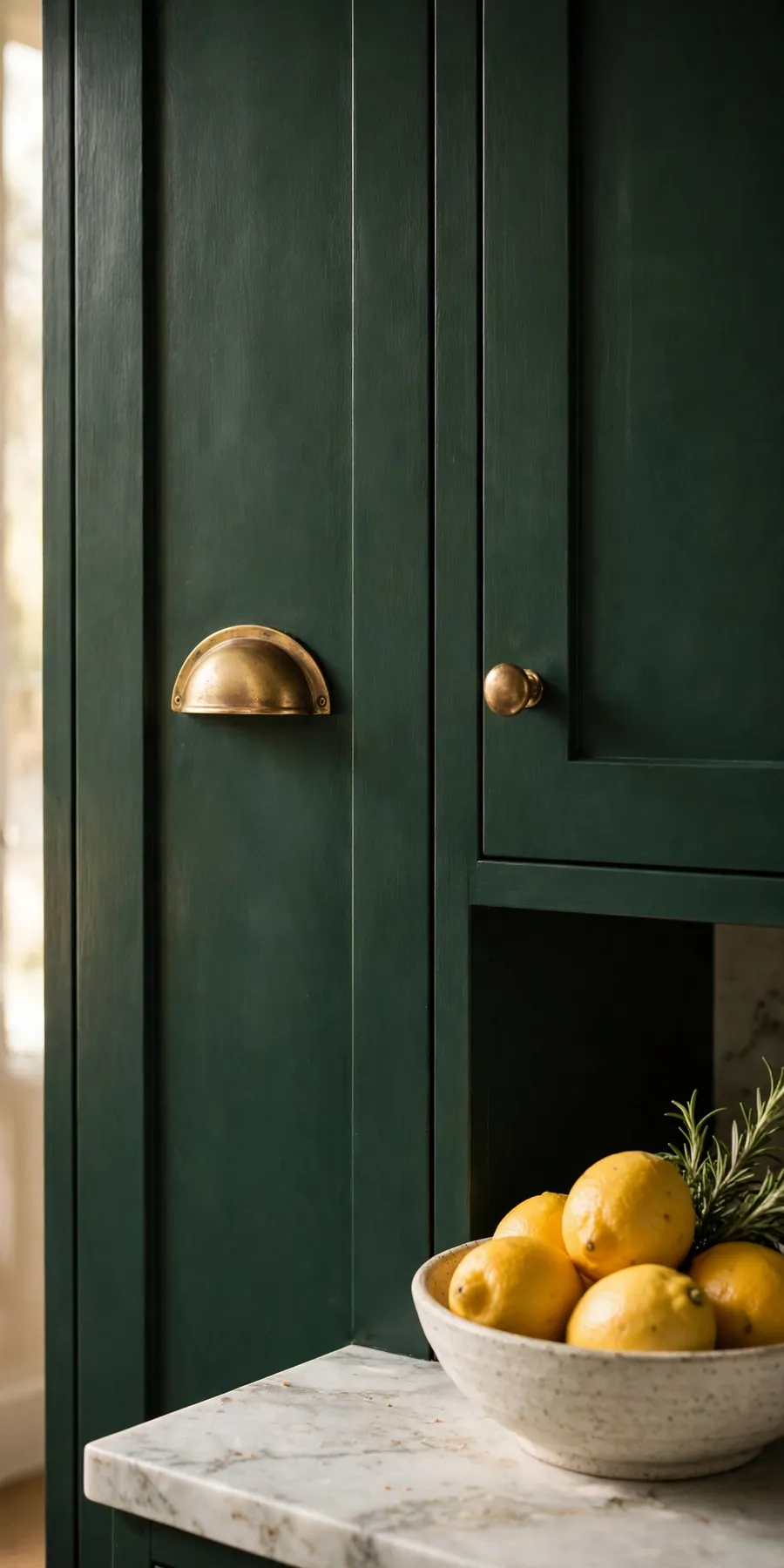
Pro tip: Never pick a green from the paint chip alone. Paint a 12-inch square on a spare piece of MDF, prop it against the cabinet, and look at it at 8 a.m., noon, and 7 p.m. under your actual lights. Greens shift more than any other color — a sage that looks soft in the store can turn gray-blue in a north-facing kitchen. A $5 sample pot beats a $1,000 repaint.
3 Olive Green Kitchen Cabinet Ideas
Olive green is the warmest green in the family, and it suits kitchens with wood floors and warm lighting better than any cool shade. Think Behr Royal Orchard or Sherwin-Williams Rosemary — greens with a yellow-brown base that sit happily next to butcher block and walnut. Olive cabinets pair well with leather bar stools, $120 to $250 each, and matte black hardware instead of brass. If your kitchen already has warm wood tones, olive is the green that will not fight them.
4 Two-Tone Green Kitchen Cabinet Ideas
Two-tone is the safest way to go bold: green below, cream or white above. Paint the lower cabinets a deep green — Studio Green, Forest Floor, or a rich olive — and keep the uppers warm white, and you get the drama without the cave. The split also saves money, since you buy one gallon of green instead of two, and it is easier to repaint the lowers later if you change your mind. Repeat the green once more in the room — a painted island base, a row of green tiles, or a sage Roman shade — so the color looks planned, not half-finished.
5 Green Kitchen Island Cabinet Ideas
If painting the whole kitchen feels like too much, paint just the island. A green island against cream perimeter cabinets is the single most-photographed kitchen look of the last two years, and it takes one gallon of paint and a weekend. Sage and celery greens keep the room light; a deep forest or emerald island anchors an open-plan space and stops it feeling like a showroom. Brass pendants, $60 to $140 each, hung low over a green island, make the color glow. This is the lowest-risk way to try the trend.
6 Celery Green Kitchen Cabinet Ideas
Celery green is the freshest of the bunch — pale, yellow-green, and full of light. It suits small kitchens and rentals better than deeper greens because it bounces light instead of soaking it up. Pair it with white marble, light wood, and polished nickel hardware for a clean, airy feel, or warm it up with brass and butcher block. Celery works on full walls of cabinets where forest green would feel heavy, so if your kitchen is small and you still want green, this is your shade. Two coats of a good cabinet paint, $50 to $80 a gallon, cover it.
7 Green Kitchen Cabinet Ideas with Brass Hardware
Hardware is where a green kitchen either sings or falls flat. Unlacquered brass is the classic pairing — the warm gold pulls the yellow out of the green and develops a soft patina over a year or two, so it looks better with age instead of worse. Cup pulls on drawers, $10 to $20 each, and knobs on doors, $6 to $12 each, are the standard mix; a full kitchen takes about 25 to 35 pieces, so budget $250 to $500 for the set. If brass feels too traditional, aged bronze or matte black both work on sage and forest greens — just skip shiny gold-tone hardware, which reads yellow against green.
8 Green Kitchen Cabinet Ideas with Butcher Block
Green cabinets and butcher block counters are a natural pair — the warm wood keeps the green from feeling cold, and the combination costs far less than stone. A maple or walnut butcher block counter runs $40 to $80 per square foot installed, against $60 to $120 for quartz, and it ages into a honeyed patina that suits sage and olive especially well. Seal the block with food-safe oil every few months, $15 a bottle, and keep a cutting board by the sink so knife marks stay off the counter. This is the look to pick if your kitchen leans farmhouse or cottage.
9 Small Kitchen Green Cabinet Ideas
Small kitchens can absolutely go green — the trick is the shade and the split. Use a pale sage or celery on all the cabinets, and the room will feel bigger, not smaller, because pale green reads almost like a warm white in bright light. Or paint only the lowers green and keep the uppers white, which draws the eye up and makes the ceiling feel higher. Keep the hardware slim and the counters pale, add one open shelf in light wood instead of a wall of uppers, and skip busy backsplash tile — a plain cream subway tile, $5 to $12 a square foot, lets the green do the talking.
10 Moody Green Kitchen Cabinet Ideas
Moody green is the grown-up end of the range: deep, smoky shades like Farrow & Ball Treron or Benjamin Moore Essex Green, paired with dark counters and low, warm light. It works best in kitchens with good natural light and plenty of wood — walnut floors, oak stools, a dark stone counter — because the warmth stops the deep green from feeling flat. Keep the walls a warm cream, not bright white, or the contrast gets harsh. A moody green kitchen costs the same to paint as any other, $800 to $1,500 DIY, but it reads like the most expensive room in the house.
Budget breakdown: DIY paint job ($400) + primer and supplies ($150) + new brass hardware ($300) + sample pots and sandpaper ($50) = about $900 to turn a standard kitchen green. Hiring a professional spray painter runs $3,000 to $7,000, but the finish is smoother and the doors are sprayed off-site, so the kitchen stays usable. Start with the island if the budget is tight — one gallon, one weekend, and you will know if green is for you.
The Bottom Line
Green cabinets work because green is the one color that feels both calm and alive, and the right shade depends on your light more than your taste. Start with a sample pot on a board, look at it morning, noon, and night, and pick the green that still makes you smile at 7 p.m. Sage if you want safe, forest if you want drama, and the island if you want to test the water first.
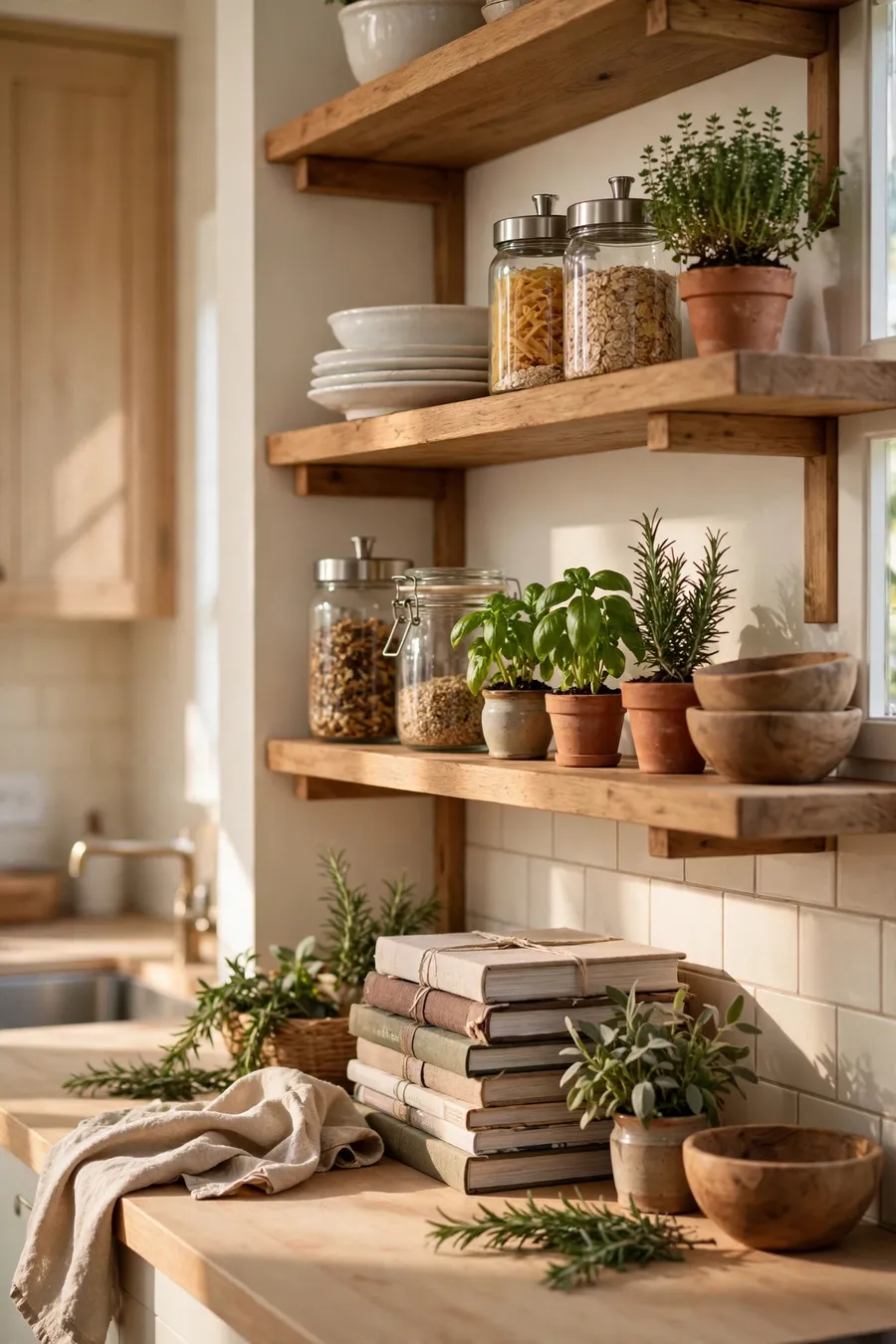
For the rest of the kitchen, these kitchen open shelving decor ideas show how to style the shelves around your new green cabinets.
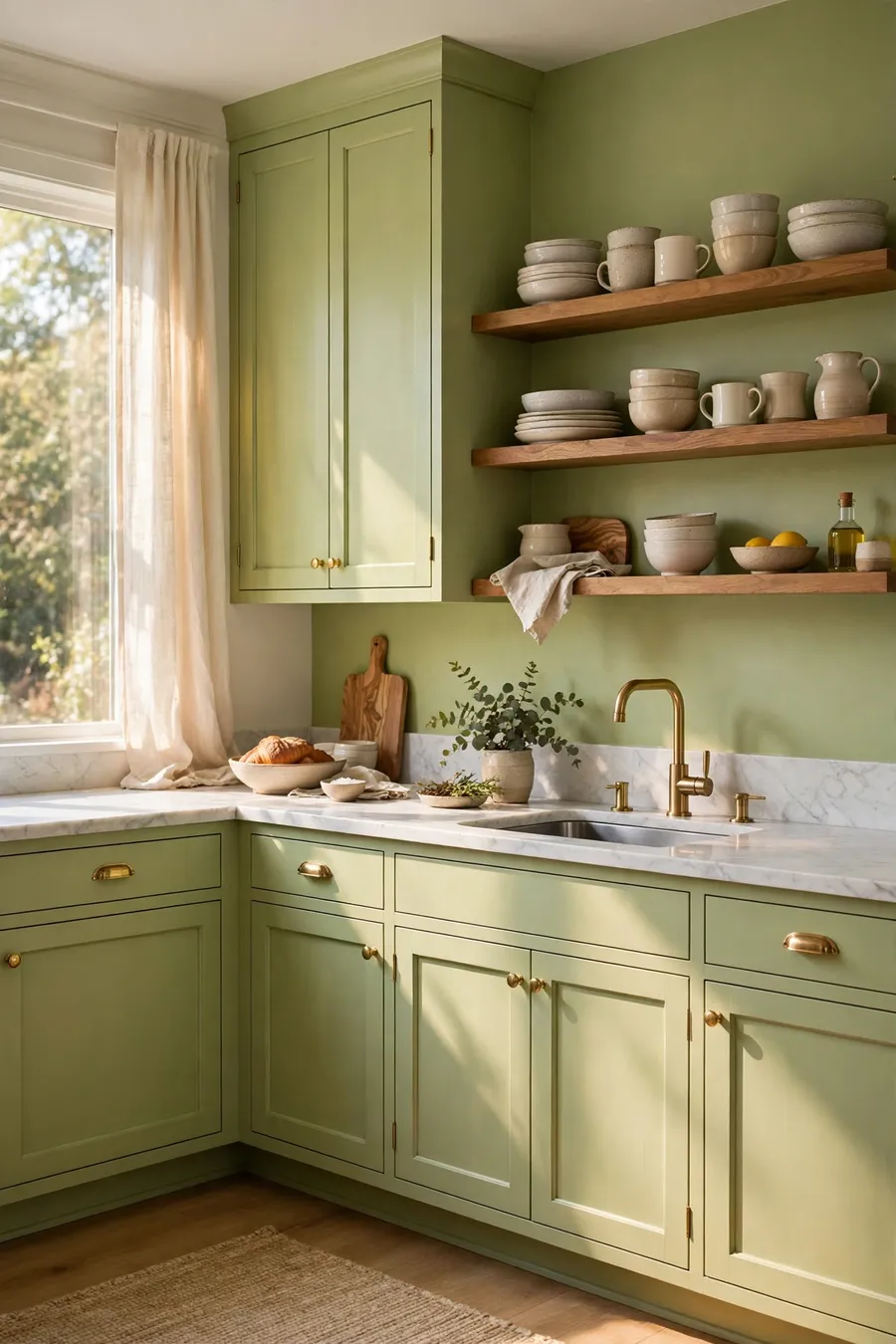
And if the green is going celery, these celery paint color kitchen ideas take the same soft green across the whole room.
Related Ideas
Frequently Asked Questions
What is the most popular green for kitchen cabinets?
Sage green is the most popular green for kitchen cabinets right now, because it sits between gray and green and works with almost any countertop. Farrow & Ball Green Smoke, Benjamin Moore Saybrook Sage, and Sherwin-Williams Evergreen Fog are the three shades painters ask for most. Deeper forest and olive greens are growing fast too, especially on islands and lower cabinets.
Do green kitchen cabinets make a kitchen look smaller?
Dark green cabinets can make a small kitchen feel smaller if they cover every wall, but pale sage and celery greens do the opposite — they read almost like a warm neutral and bounce light around. The safe move in a small kitchen is to paint the lower cabinets green and keep the uppers white or cream, or use green only on the island. Good lighting matters more than the shade.
What color hardware goes best with green kitchen cabinets?
Unlacquered brass is the classic match for green kitchen cabinets — the warm gold pulls out the yellow in the green and ages into a soft patina. Matte black suits modern sage and forest greens, while polished nickel or chrome works best on cool, blue-leaning greens like Green Smoke. Avoid shiny gold-tone hardware that reads yellow; brushed or aged brass looks far better against green.
How much does it cost to paint kitchen cabinets green?
Painting kitchen cabinets green costs about $800 to $1,500 as a DIY job for a standard kitchen, including cabinet paint, primer, sandpaper, and new hardware. Hiring a professional spray painter runs $3,000 to $7,000 depending on kitchen size and whether the doors are sprayed off-site. Green cabinet paint itself costs $50 to $90 a gallon, and most kitchens need two gallons for two coats.