Small Home Office Nook Ideas That Maximize Space
You don't need a spare room to work from home well — you need a small home office nook that earns its footprint. With remote work here to stay, the most-searched workspace trend of 2026 is the micro-office: a defined, productive corner carved out of the living room, bedroom, hallway, or even a closet.
This guide shows you exactly how to build one, from choosing the right spot to zoning it so it feels separate from the rest of your home.
Find Your Nook: The Best Spots in Small Spaces
A home office nook only needs about 3 to 8 feet of width. Look at the overlooked places: an unused corner in the living room, the end of a hallway, a dead wall in your bedroom, the space under the stairs, or a closet you can clear out. The single most important factor is natural light — a nook near a window feels bigger, keeps your energy up, and gives you a video-call backdrop for free.
Measure your spot before buying anything, and note where the nearest outlet is. Measure twice, buy once.
Choose the Right Desk for a Tiny Footprint
The desk defines the nook, and for small spaces the lighter the visual profile, the better. These are the best options for a home office nook in a small apartment:
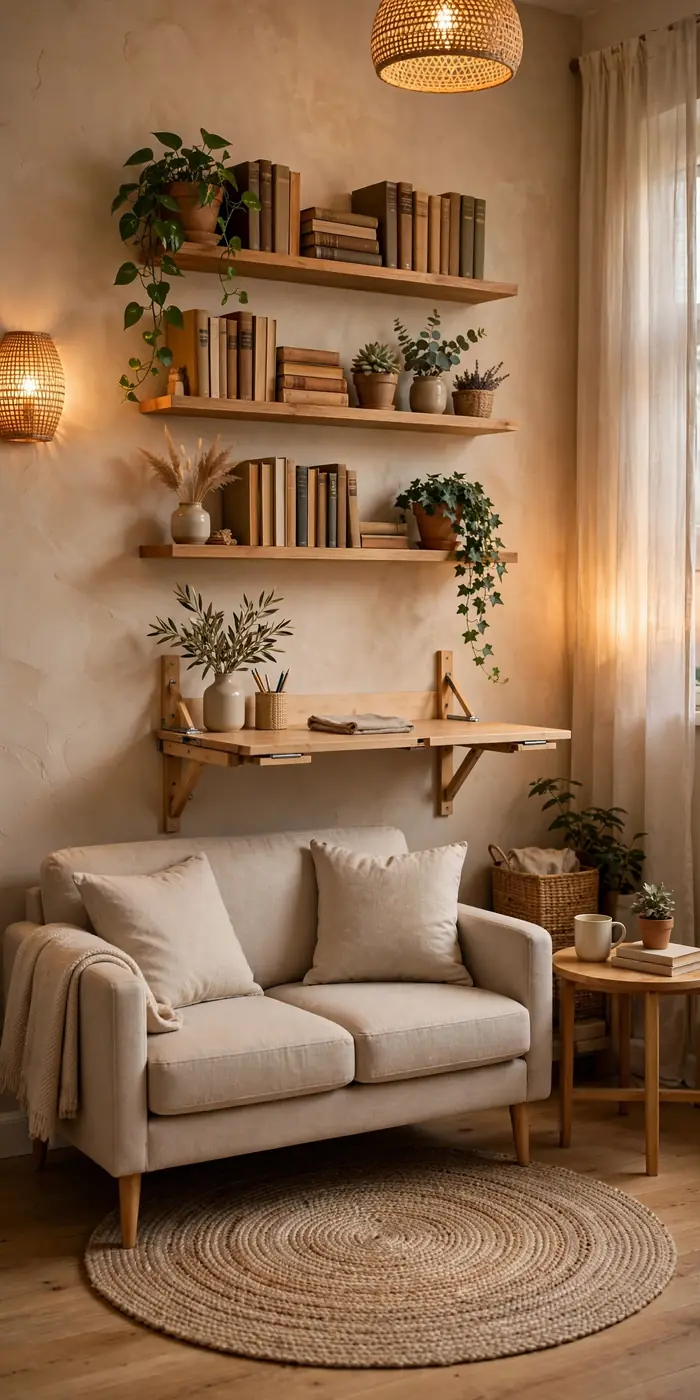
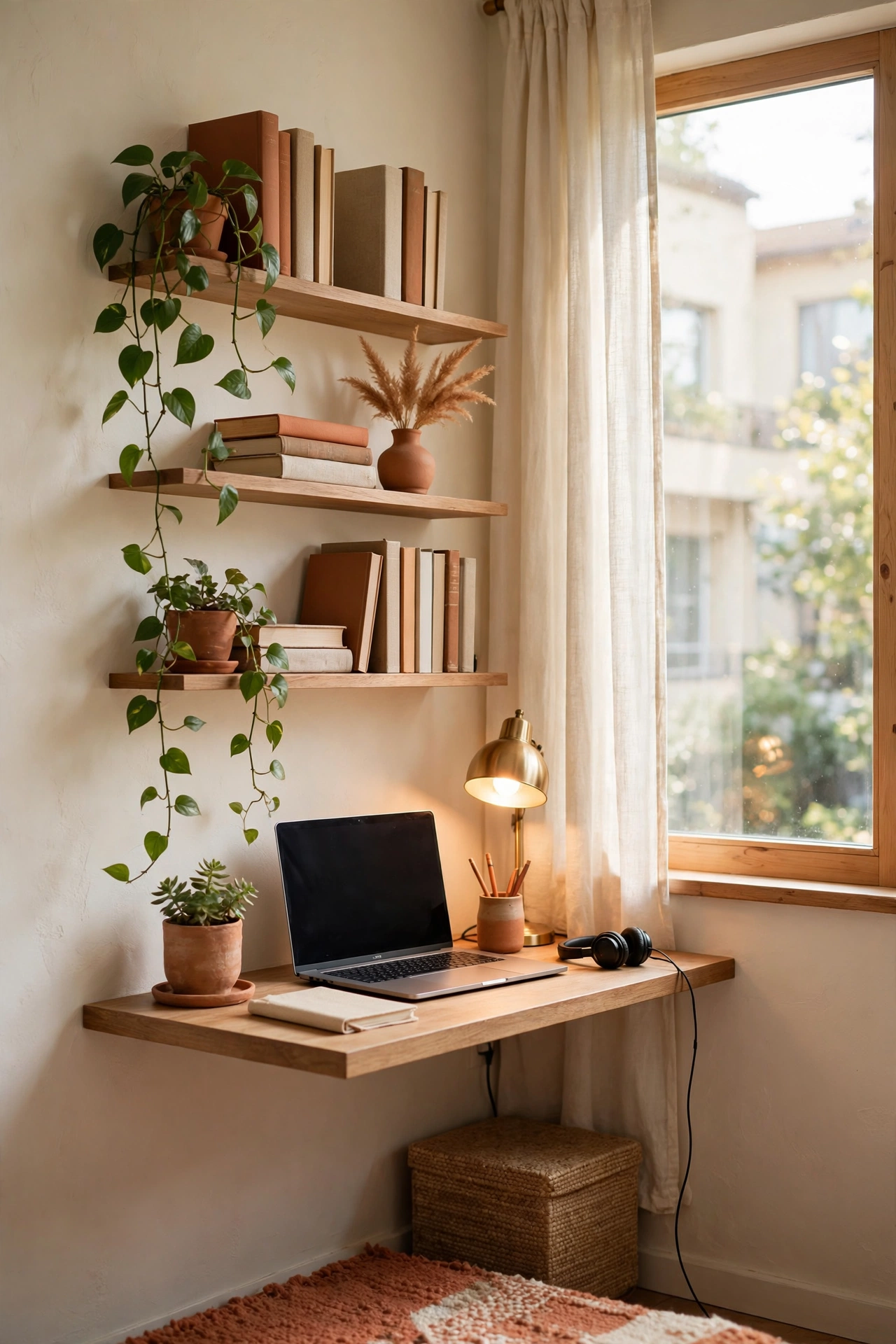
- Floating (wall-mounted) desk: The top pick for micro spaces. It frees up all floor space underneath and makes the nook feel open.
- Fold-down wall desk: Works like a Murphy desk — fold it up after work and the wall disappears back into your living space.
- Compact corner desk: Uses dead corner space and naturally creates a tucked-in, focused zone.
- Slim console or shelf desk: A deep wall shelf with slim legs can double as a desk in a pinch.
Pick pieces with slim legs and open bases rather than heavy cabinets — they keep sightlines clear so the nook never feels boxed in.
Pro tip: A small home office nook doubles as a great Zoom background. Keep the wall behind the desk styled — one piece of art, a shelf with a plant, and good lamp light — and your calls will look instantly more professional.
Go Vertical: Storage That Doesn't Eat Floor Space
In a small home office nook, storage lives on the wall. Install floating shelves above the desk for books, reference binders, and a plant. A pegboard is the ultimate nook tool — it holds pens, headphones, cables, and task lighting in a footprint of zero floor inches. Add under-shelf LED strips for glow and stackable desktop trays for paperwork.
Keep the desk surface itself nearly clear: laptop, lamp, one personal item. When everything has a wall home, a 3-foot desk feels like plenty.
Light It Like a Real Office
Overhead ceiling light alone makes any nook feel like a cave. Layer three levels of light: a task lamp with a focused warm-white beam for your work surface, ambient glow from LED strips or a nearby floor lamp, and daylight from the window during the day. Position the desk beside a window rather than facing it directly to avoid glare on your screen.
Switch bulbs to warm white (2700–3000K). Cool office fluorescents kill the cozy-home feeling you're building.
Create a "Focus Pod" Feeling With Zoning
The 2026 trend that makes nooks work psychologically is the focus pod: visual signals that tell your brain "this is where we work." You don't need walls — use these separators instead:
- A distinct rug under the desk chair to mark the zone's boundary.
- A curtain or open-backed shelving unit placed between the nook and the living area.
- A slightly deeper paint color or removable wallpaper on the nook's wall.
- A dedicated desk lamp that you switch on when work starts — and off when it ends.
This psychological boundary is what stops work from bleeding into your evening. Leave the zone, leave work mode.
Pick a Chair That Works Twice as Hard
Don't work from the dining chair — your back will protest. Look for an armless ergonomic task chair in a warm neutral; it tucks fully under the desk when the day ends and looks like furniture, not office equipment. If the nook shares your living room, match the chair's finish to the room's palette so the zone blends instead of shouting.
Tame Cables and Clutter
Nothing shrinks a small space faster than cable spaghetti. Run a stick-on cable tray under the floating desk, use one power strip mounted behind it, and keep a small lidded box for chargers and dongles. End every workday with a 2-minute reset: close the laptop, file loose papers, wipe the surface. A tiny nook only stays calming when it stays tidy.
Add Life: Plants, Texture, and One Personal Touch
A nook that feels like a cubicle won't inspire you. Soften it: a trailing pothos on the top shelf, a small framed print, a woven basket for supplies, a linen curtain if it's a window nook. One plant and one piece of art is enough — the restraint is what keeps it feeling designed instead of cramped.
Budget breakdown: Floating desk ($40) + pegboard ($20) + warm LED task lamp ($25) + armless task chair, thrifted ($30) + small rug ($20) + plant ($10) = a complete small home office nook for about $145. Buy the chair new if you can; everything else thrives secondhand.
The Bottom Line
The best small home office nook ideas all follow the same formula: steal an underused corner, go light and vertical, zone it with a rug and light, and keep the surface clear. You don't need square footage — you need intention. Build the nook this weekend, and Monday morning will feel completely different.