Motif Berbere Living Room: 8 Global Touches
Motif berbere living room ideas bring North African textile design into your home: black-and-white Berber diamond rugs, hand-drawn mudcloth pillows, rattan chairs, woven baskets and leather poufs layered over a cream palette. Start with one large Berber rug as the anchor, add 3–5 patterned textiles in the same black-cream family, and warm it all with layered lighting.
Here's a stat that surprised me: Pinterest searches for "motif berbere" jumped over 210% this year. It's the textile backbone of the whole Afrohemian movement — those cream rugs with black diamond lines you've seen in every design magazine living room. The good news is this is one of the easiest trends to bring home. The entire look runs on about four elements and a strict two-color palette, which means fewer chances to get it wrong.
Below are eight motif berbere living room ideas that take you from bare floor to finished room — most of them one purchase or one weekend swap away.
1. The Beni Ourain Rug Ideas
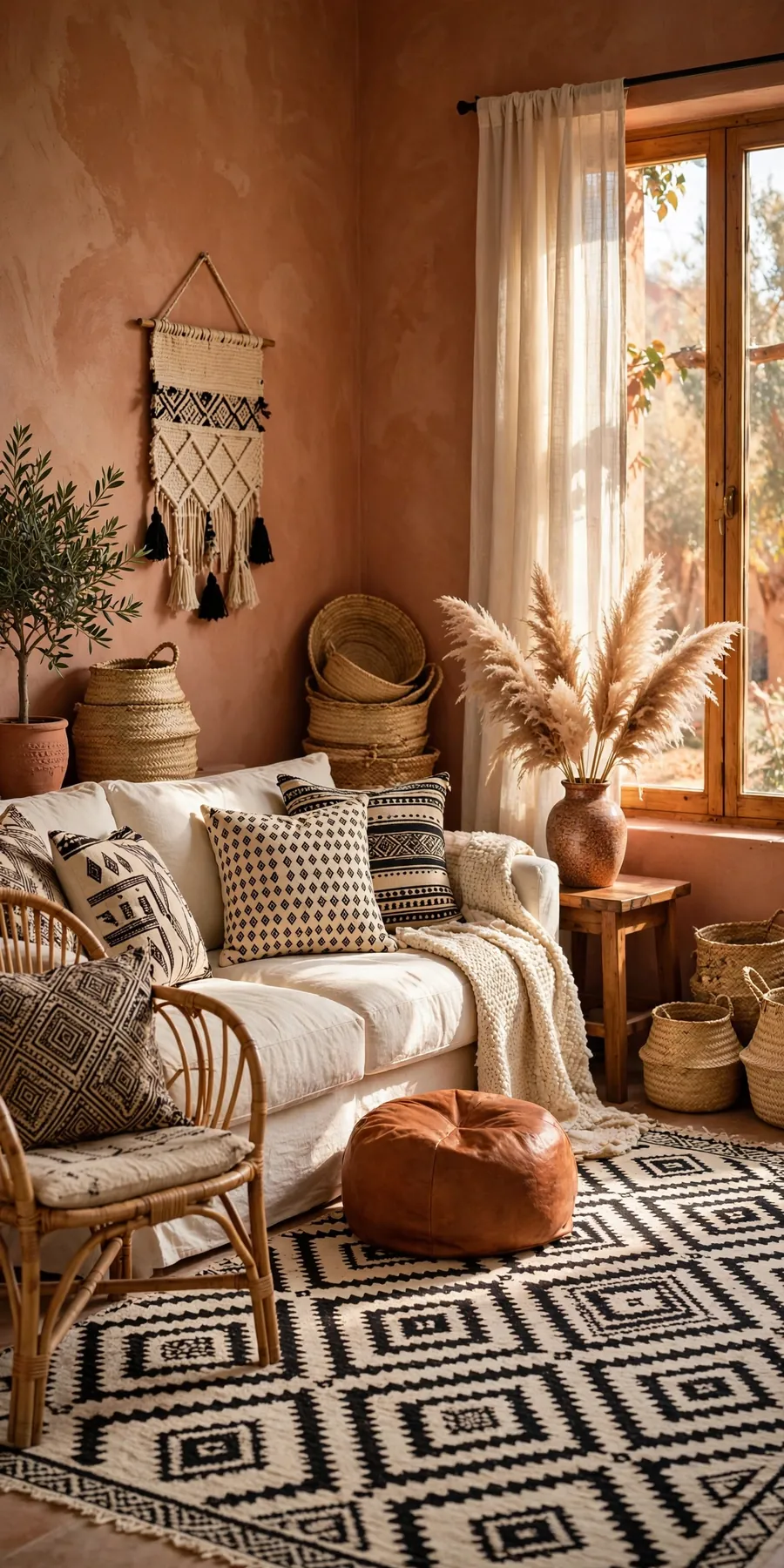
Everything starts here. The classic Beni Ourain — cream wool, black geometric diamond lines, shaggy high pile — is the single fastest way to make a room read "global." Size it generously: an 8x10 rug that extends at least 18 inches past the sofa on each side, or a 5x7 if the room is under 150 square feet. Handmade originals run $400–$1,500, but machine-woven versions start around $120–$250 and nail the look from any normal viewing distance. If you buy one real thing, make it this — a thick pile changes how the whole room feels underfoot.
2. Mudcloth Pillow Layering Ideas
Mudcloth — Mali-style fabric with hand-drawn tribal symbols in black on cream — is the supporting actor. Mix 18-inch and 20-inch mudcloth cushion covers ($18–$35 each) across your sofa, pairing the patterned ones with two solid cushions in cream or camel. I love pairing one bold large-scale mudcloth print with one small-scale zigzag — the size contrast is what makes it look styled instead of matchy. Pro tip: buy the inserts one size up from the cover (a 20-inch insert in an 18-inch cover) for that plump designer look.
3. Rattan Accent Chair Ideas
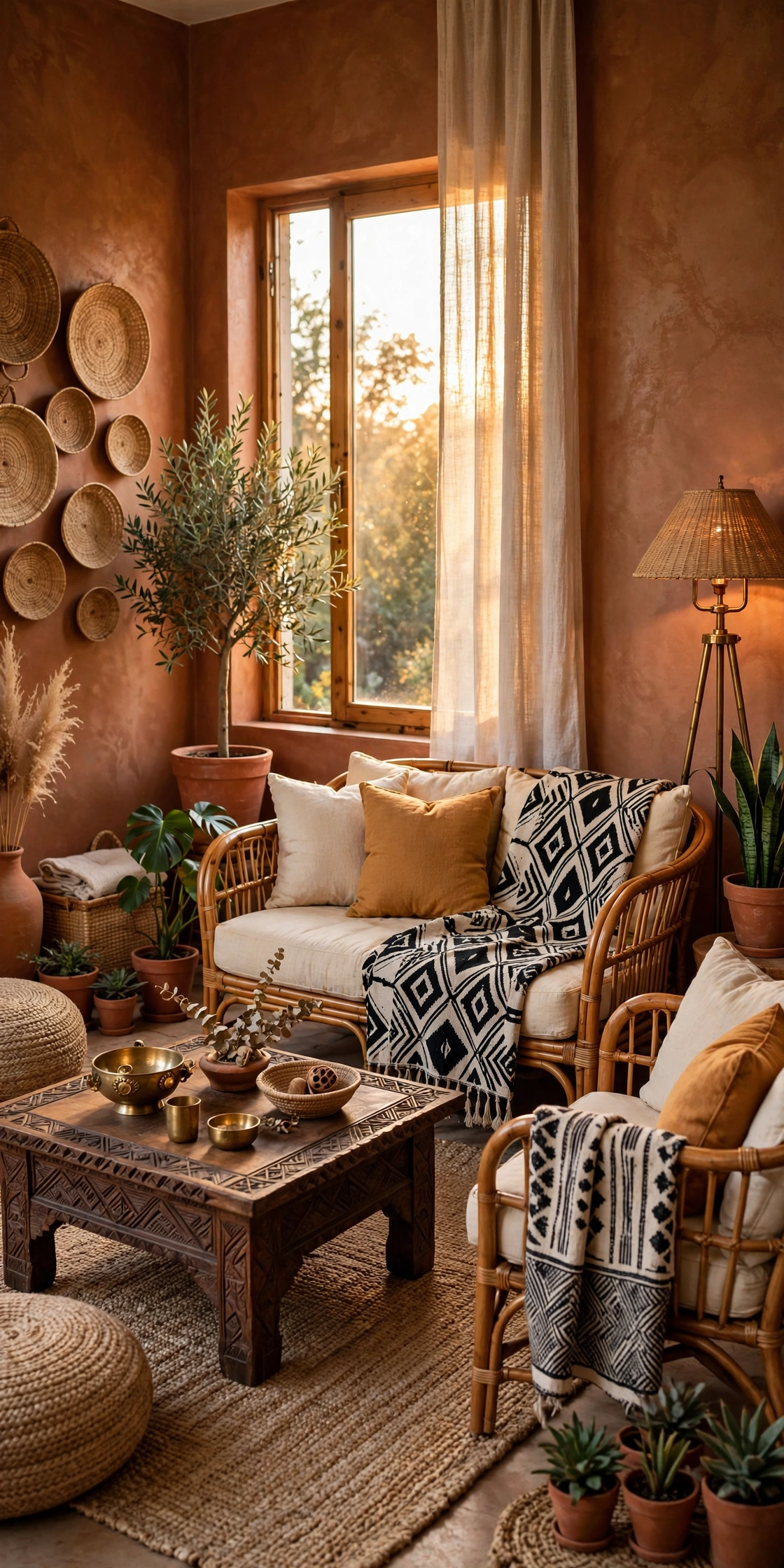
Natural rattan or cane is the texture this style was made for. A rattan accent chair — peacock, egg, or a simple curved dining-style chair — placed at a 45-degree angle to the sofa breaks up the upholstery and adds the warm wood tone the black-and-cream palette needs. Drape one mudcloth throw over the back. Rattan chairs run $80–$250 depending on style; even a thrifted one ($20–$40) works because the material, not the silhouette, does the talking.
4. Woven Basket Styling Ideas
Seagrass and sisal baskets are the cheapest way to extend the Berber look into corners. Use three sizes: a large basket ($25–$40) for the blanket or firewood pile, a medium one beside the chair as a side table with a wooden tray on top, and a small lidded basket for remote clutter. The natural tan fibers sit in the same warm family as the cream textiles, so everything connects. Group odd numbers — baskets look intentional in threes, accidental in twos.
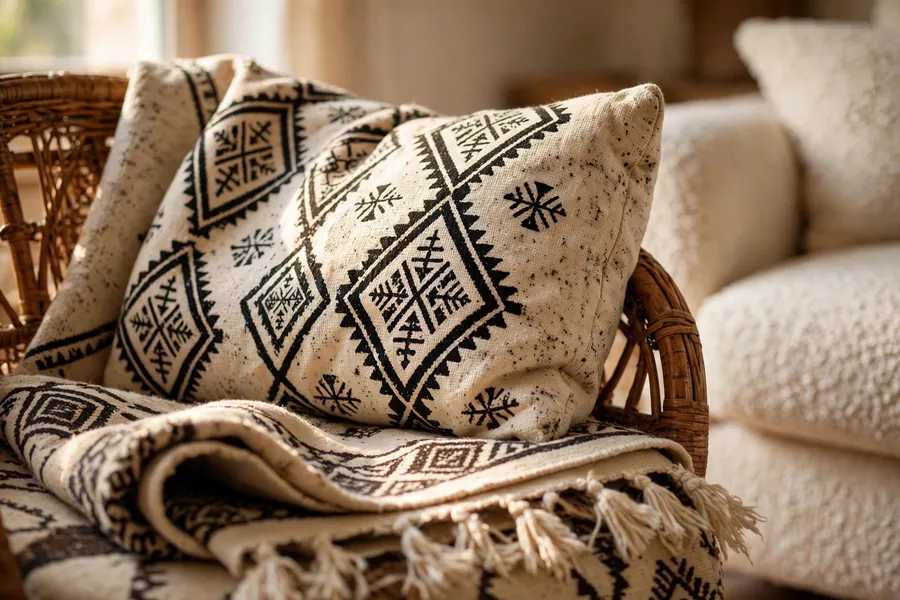
The 60-30-10 rule for this look: 60% cream and natural tones (walls, sofa, rug base), 30% black pattern (rugs, pillows, mudcloth), 10% warm accents (rattan, leather, wood, brass). When a Berber room feels off, it's almost always too much black pattern — pull one patterned piece out and watch it settle.
5. Leather Pouf and Ottoman Ideas
A cognac or camel leather pouf ($60–$120) is the color warm-up the palette needs. Black-and-cream on its own can skew monochrome and flat; one hit of rich leather gives the eye somewhere warm to land. Place it off-center from the coffee table, slightly rotated — leather poufs look stiff when squared up perfectly. The patina improves with use, which is rare in decor: this is a piece that gets better looking the more your family kicks it around.
6. Berber Textile Wall Hanging Ideas
Walls are where people underuse this trend. A genuine mudcloth or a Beni-style wool hanging ($50–$150) mounted on a simple wooden dowel turns an empty wall into the room's focal point in twenty minutes. Hang it at sofa-back height with the bottom of the textile about 6–8 inches above the sofa. If a full hanging feels bold, start with two smaller woven baskets hung flat on the wall in a cluster — same texture story, half the commitment.
7. Pattern-Mixing Scale Ideas
This is the rule that keeps a Berber room from looking like a textile shop exploded. Mix patterns by scale, never by color: keep every print in the black-and-white-cream family, then use one large-scale pattern (the rug diamonds), one medium (pillow symbols), and one small (a throw or pouf texture). Two large-scale patterns compete. Three small ones blur. The eye needs that size ladder to read the room as curated instead of chaotic.
8. Warm Lighting for Berber Patterns Ideas
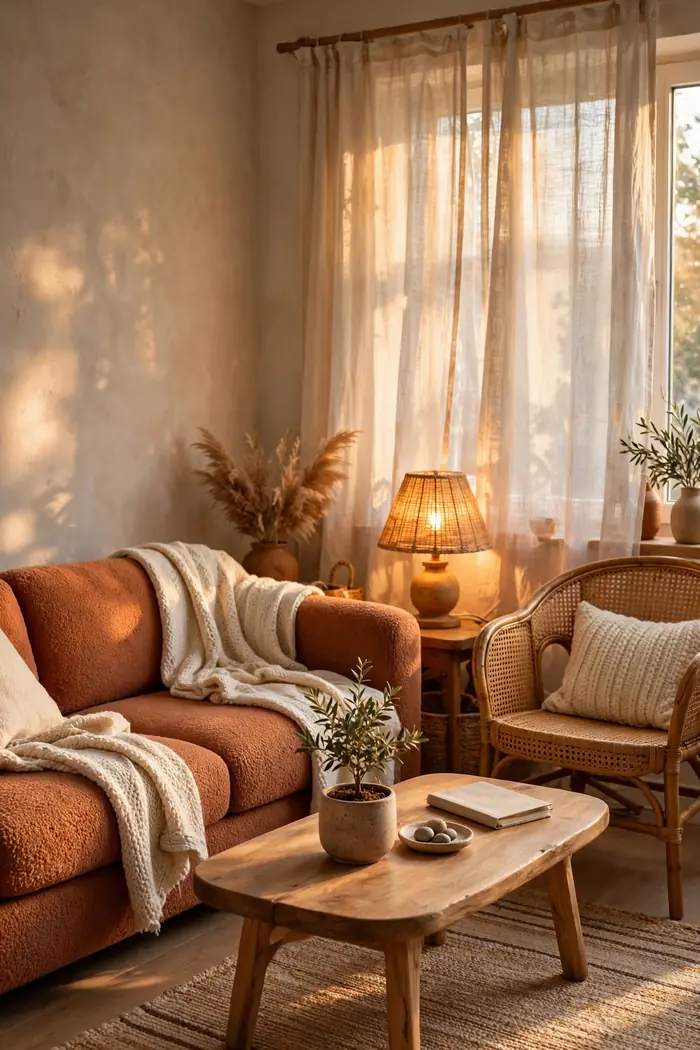
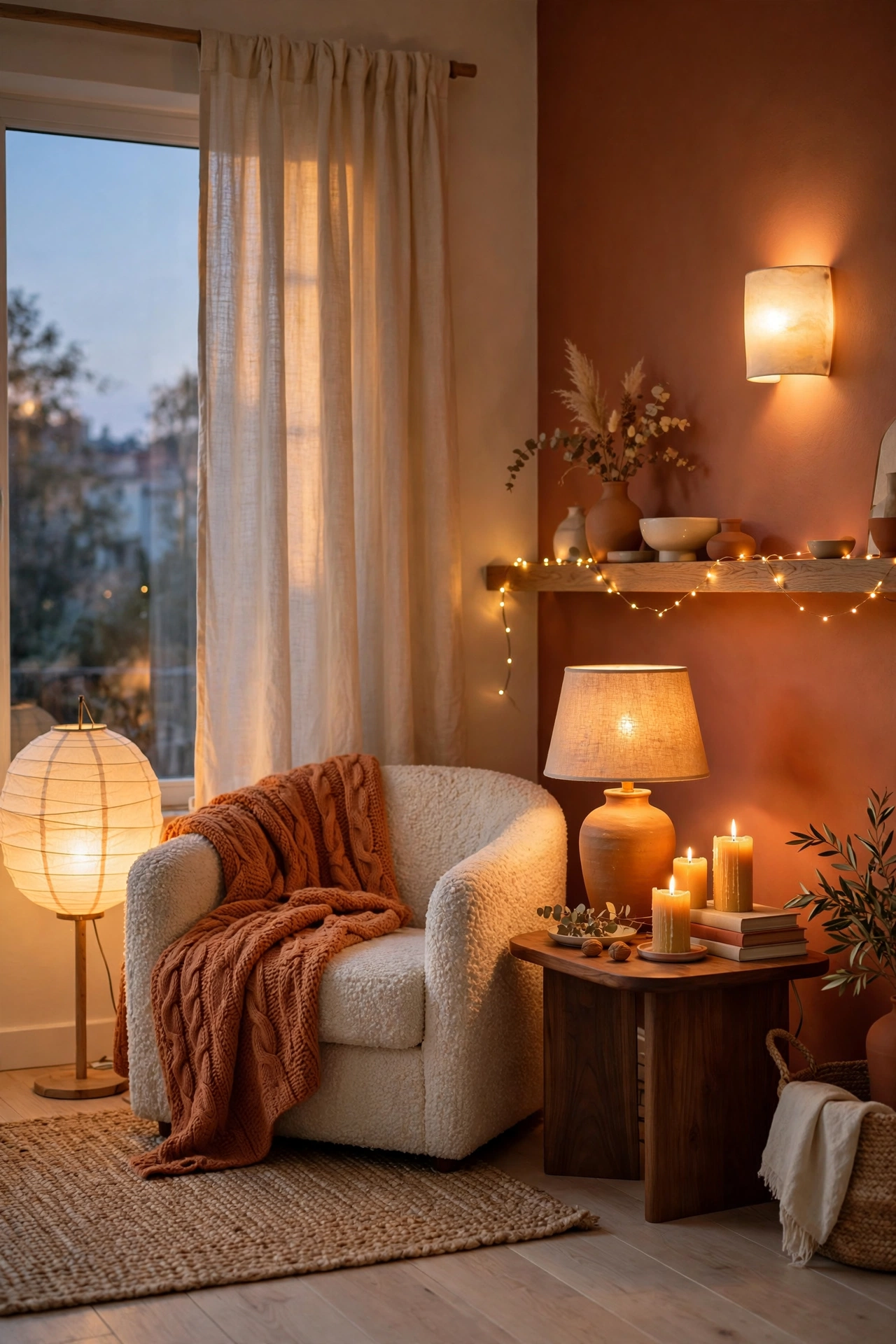
Black-and-cream textiles drink light, so lighting decides whether the room feels like a warm Moroccan riad or a showroom. Use warm bulbs (2700K) in everything: a floor lamp with a linen shade behind the reading chair, a rattan pendant over the coffee table ($60–$150), and candlelight — real or battery — on the shelf. Avoid single overhead lighting; three points of warm light at different heights make the geometric patterns glow instead of flattening them.
Starter budget: Machine-woven Beni-style rug ($150) + 3 mudcloth pillow covers ($75) + thrifted rattan chair ($30) + seagrass basket set ($35) + leather pouf ($80) = a complete motif berbere living room for about $370 — no renovation, no paint, done in a weekend.
The Bottom Line
Motif berbere works because it's a whole design language built from almost nothing: cream, black, and honest natural materials. Anchor the room with a diamond rug, layer in mudcloth and rattan, warm it with leather and layered light, and let the patterns do the talking. It's the rare trend that looks expensive at thrift-store prices — and with Pinterest interest up 210%, your living room will look current well into 2027.
Frequently Asked Questions
What does motif berbere mean in home decor?
It refers to the textile motifs of Morocco's Berber (Amazigh) tribes — most famously the black geometric diamond-line patterns woven into cream wool on Beni Ourain rugs, plus Mali-style mudcloth with hand-drawn tribal symbols. In decor it has become shorthand for that black-and-white tribal textile look.
How do I mix Berber patterns without them clashing?
Keep every pattern in the same black-and-white-cream family and vary the scale instead of the color. One large-scale pattern (the rug) plus one medium (pillows) plus one small (a throw) reads layered, not chaotic. Three different tribal prints in three different colors is what makes a room look busy.
Are real Berber rugs expensive?
Handmade Beni Ourain rugs typically run $400–$1,500 for an 8x10, depending on pile and origin. Good machine-woven versions with the same diamond motif start around $120–$250 and look convincing under a sofa. The look is about the pattern and texture — guests can't tell the weave from across the room.
Does motif berbere work in a small living room?
Yes — it's one of the best global styles for small rooms because the palette is so limited. One 5x7 Berber rug, two mudcloth pillows and a woven basket give a studio-sized living room the full look without crowding it. The light cream background of the patterns keeps the room feeling open.