Vintage Wood Coffee Table Styling: 10 Ideas
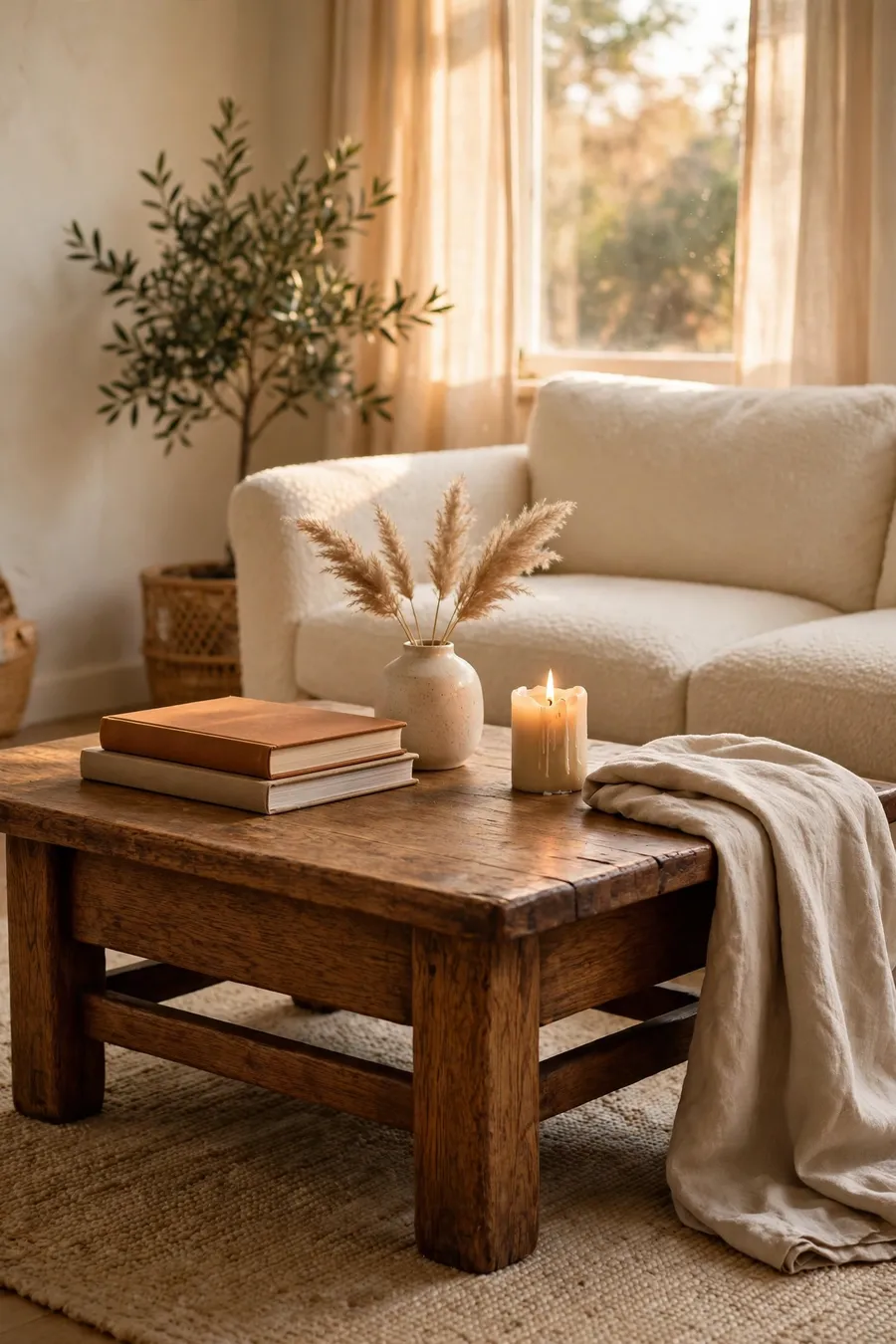
Vintage wood coffee table styling is about letting the old wood be the star: corral clutter on a tray, stack two or three books, add one living thing and one candle, and keep a third of the surface empty. These 10 ideas will turn a thrifted or inherited wood coffee table into the best-looking piece in your living room — most of them cost under $20.
I bought my first vintage wood coffee table at an estate sale for $25, and it looked incredible for about one day — then my living room swallowed it. Keys, remote controls, a stack of mail, and suddenly the beautiful oak top was just another surface collecting clutter. Vintage wood coffee tables are one of the top-trending vintage items right now, and the reason they're everywhere is simple: a piece with real grain and real weight grounds a room in a way new furniture never quite does. The trick isn't buying the table. It's styling it so the wood gets the attention it deserves.
1. Start With the Tray Formula
Every good vintage wood coffee table styling setup starts with a tray. A tray does two things: it gathers the small stuff (remotes, lip balm, that weird screw you've been meaning to fix) into one neat zone, and it protects the finish from scratches. Pick a tray that contrasts the wood — woven rattan, hammered brass, or a dark marble tray on light oak. Then put the tray off-center, never dead in the middle. Off-center looks styled; dead-center looks like a showroom.
2. Stack Two or Three Coffee Table Books
Books give the table height and personality. The rule is simple: two or three books, largest on the bottom, and they should actually be books you'd flip through — a $5 art book from a used bookstore beats a $40 "display book" every time. Put the stack on the tray or directly on the wood, angled slightly. A small object on top (a bud vase, a brass paperweight) stops the stack from looking like an afterthought.
Pro tip: Books are the cheapest height trick in decorating. A thrifted hardcover raises a small candle or vase by exactly the three inches it needs to join the conversation. Strip the dust jackets off for covers that look expensive.
3. Use the Odd-Number Rule for Every Vignette
If your coffee table looks "off" and you can't say why, count the objects. Even-numbered groups look formal and stiff; odd-numbered groups look natural. Three items (tray, book stack, vase) or five items beats two or four every time. This is the fastest styling fix there is — just add or remove one thing and the whole table suddenly works.
4. Vary the Heights
A table where everything sits at the same height looks flat. You want a staircase of heights: something tall (a vase with dried stems, 12–16 inches), something medium (the book stack, 4–6 inches), and something low (a candle, a small bowl). The tallest piece goes at the back or one end, and your eye travels down across the rest. If everything you own is short, stack books under a vase to manufacture height — nobody will know.
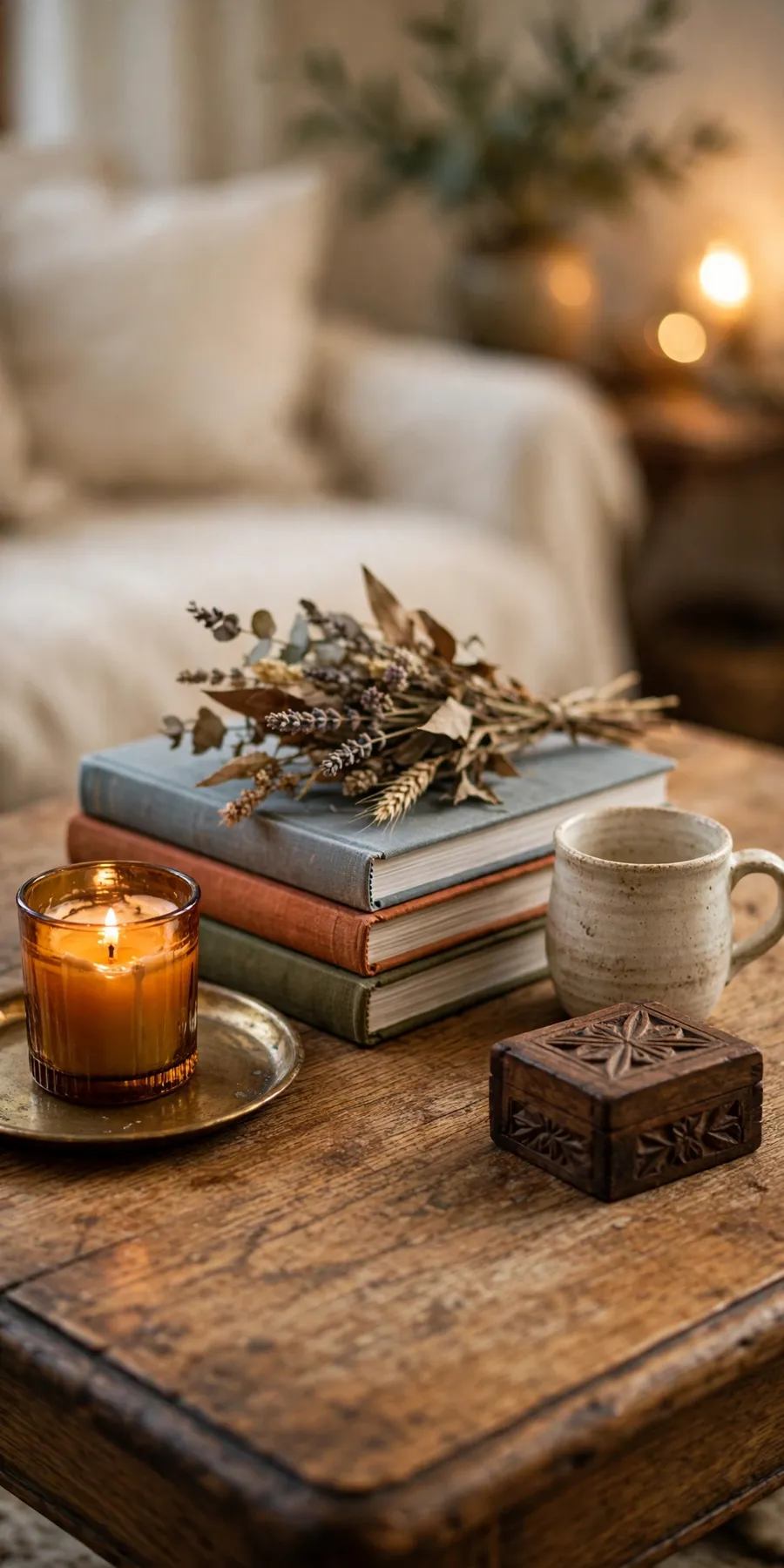
5. Add Something Living (or Once-Living)
Wood is warm but it's also flat in color, so the table needs something organic to keep it from feeling heavy. A small plant in a ceramic pot, a bud vase with fresh stems, or dried pampas grass in a stoneware vase all work. Dried stems are the budget hero here — a $6 bunch lasts a year and suits vintage wood perfectly, while fresh flowers every week would bankrupt the $20 budget I promised.
6. Let the Wood Breathe: Leave a Third Empty
The hardest styling move is doing less. Keep roughly a third of the table surface completely clear — that breathing room is what makes the styled third look intentional instead of cluttered. That empty space also has a job: it's where your coffee cup actually goes. A table that's too pretty to use is a table nobody loves.
Pro tip: Revive dull vintage wood with a single coat of Danish oil. Wipe it on, wait 20 minutes, buff it off — dry, grayed-out grain comes back richer and darker for about $12. It's the highest-impact hour you can spend on a thrifted table.
7. Layer a Small Textile Underneath
A short runner or folded throw draped across one end of the table softens all that hard wood. Natural linen, a vintage kilim strip, or even a folded cotton blanket in a warm stripe works — the textile adds pattern and warmth that the wood can't provide on its own. Tuck it under the tray so it looks anchored, not tossed.
8. Style for the Rug Below
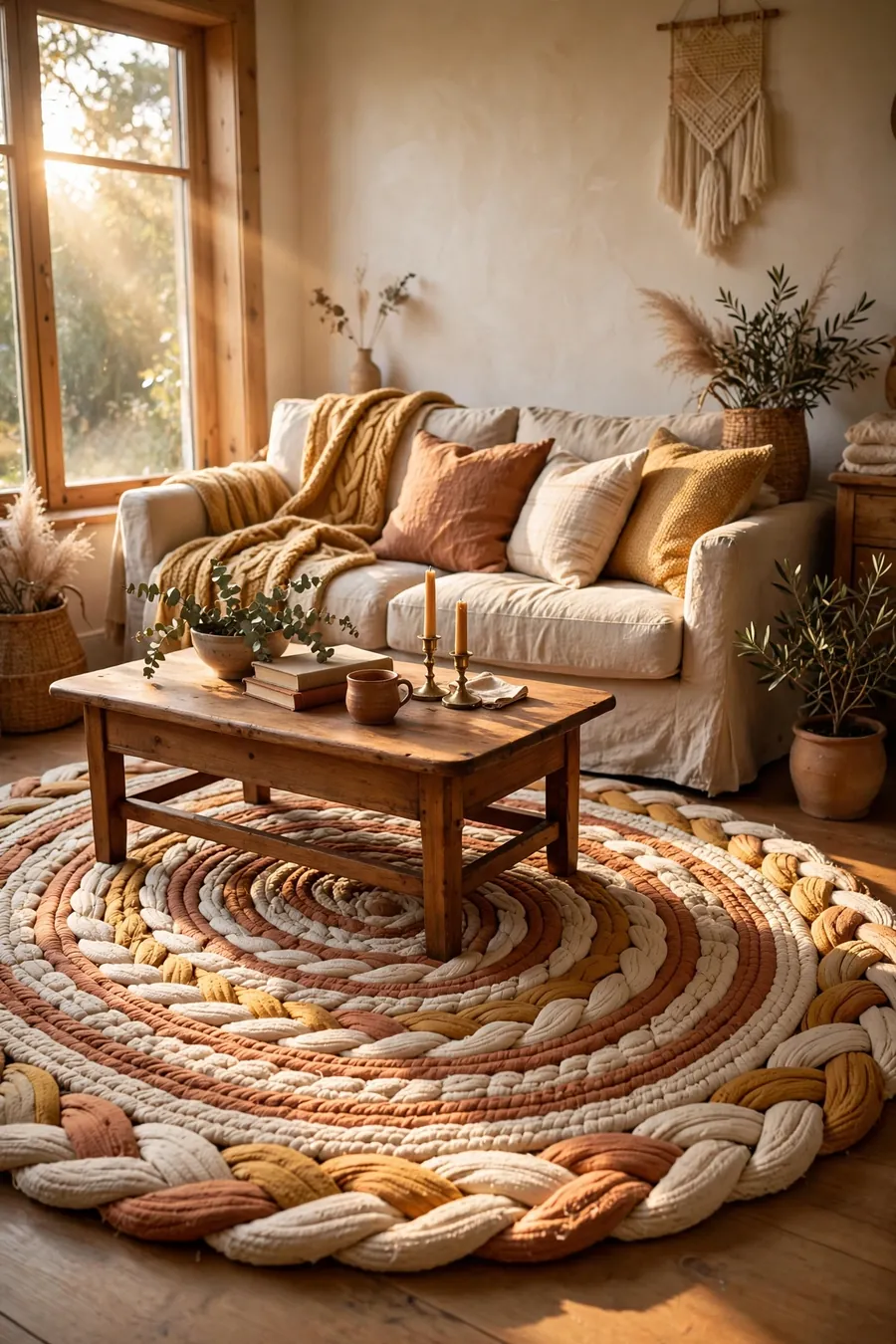
The table doesn't float alone — the rug underneath is half the composition. A vintage wood table looks best over something with texture: a jute rug, a low-pile wool rug, or one of those braided beauties. The rug should extend at least 8–12 inches past the table on all sides; a rug that's smaller than the table makes the whole seating area look cramped. These vintage braided rug ideas pair perfectly with an old wood table if you want the full vintage stack.
9. Add Candlelight for Evening Warmth
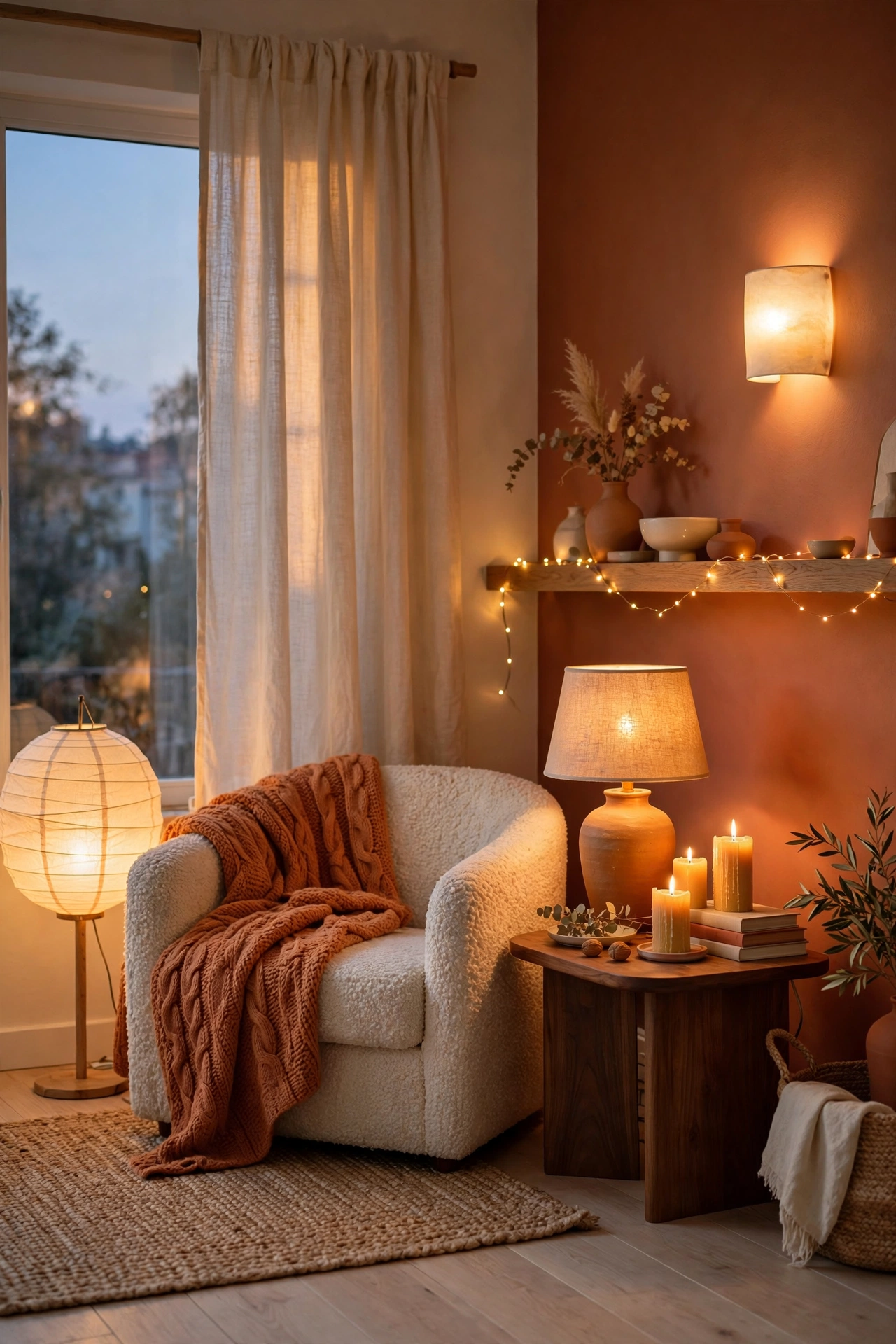
Old wood was made for candlelight — the grain catches the flicker in a way new laminate never does. One pillar candle or a small lantern on the tray transforms the table after dark. Keep candles on the tray or a heat-safe holder (wax stains are the enemy of vintage finishes), and if you love the look but not the fire risk, a battery candle in an amber glass holder fakes it convincingly. For the lighting side of the room, these warm lighting decor ideas will make the whole corner glow.
10. Protect the Finish Like It Matters
All this styling is pointless if the finish gets ruined. Felt pads under anything heavy or metal-based, coasters under every single drink (no exceptions, not even for guests), and a tray under candles. Twice a year, wipe the table down and apply a light coat of paste wax — it takes twenty minutes and it's the reason some vintage tables still look new after fifty years. If you're refinishing thrifted finds regularly, these vintage thrift flip ideas cover the before-and-after workflow.
Related ideas
The vintage look works best as a stack, so keep going. These vintage braided rug ideas give your coffee table the perfect textured foundation. If thrifted wood is your thing, these vintage thrift flip ideas show how to take the next piece from rough to beautiful. And these warm lighting decor ideas will make your whole vintage corner glow after dark. For the bigger picture of what everyone is saving right now, these home decor inspo ideas round up the season's most-loved looks.
Frequently Asked Questions
How do I make an old wood coffee table look good again?
Start with a deep clean using a wood cleaner, then rub in a wood oil like tung or Danish oil to feed dry grain — it darkens the finish slightly and hides most small scratches. For ring marks, a paste of baking soda and water buffed gently along the grain works on many vintage finishes. Restyle the top afterward with fewer, larger pieces so the refreshed wood gets to be the star.
What should I put on a vintage wood coffee table?
The classic formula is a tray (to corral small items), a stack of two to three books, one living thing like a small plant or dried stems, and one candle or lantern. Keep everything in odd numbers and vary the heights — tall vase, medium books, low candle. Leave a third of the surface empty so it doesn't look cluttered.
How do I protect a vintage wood coffee table from damage?
Use felt pads under anything heavy or metal-based, coasters under every drink, and a tray under candles so wax never touches the finish directly. A light coat of paste wax twice a year adds a protective barrier that makes water rings wipe off instead of soaking in.
Should I paint or refinish a vintage wood coffee table?
If the piece has beautiful grain and dovetail joints, keep it — oiled wood beats painted wood in every vintage interior. Paint only when the finish is beyond saving (deep gouges, peeling veneer) or the piece is a mass-produced laminate with no real grain to show off. When in doubt, try oil first; you can always paint later, but stripping paint is miserable.