Webster Green Living Room Ideas: 10 Looks
Webster Green living room ideas center on Benjamin Moore's 2027 Color of the Year (HC-130), a rich grounded green that looks expensive without trying. The winning formula: pair it with cream upholstery, brass accents, and warm 2700K lighting, then decide between one dramatic accent wall or full color drenching. These 10 looks work from a single gallon up to a whole-room transformation.
Every October, paint companies crown a Color of the Year, and most of them are forgettable within a year. Webster Green is different. When Benjamin Moore announced HC-130 as its 2027 pick on October 14, it felt like the rare choice that was already a classic — a deep, warm green from the Historical Collection that looks like it belongs in rooms that have had good bones for a century. I love pairing it with cream and brass because the combination never shouts. It just sits there looking quietly rich, the way a good leather chair does.
1. Paint the Sofa Wall and Stop
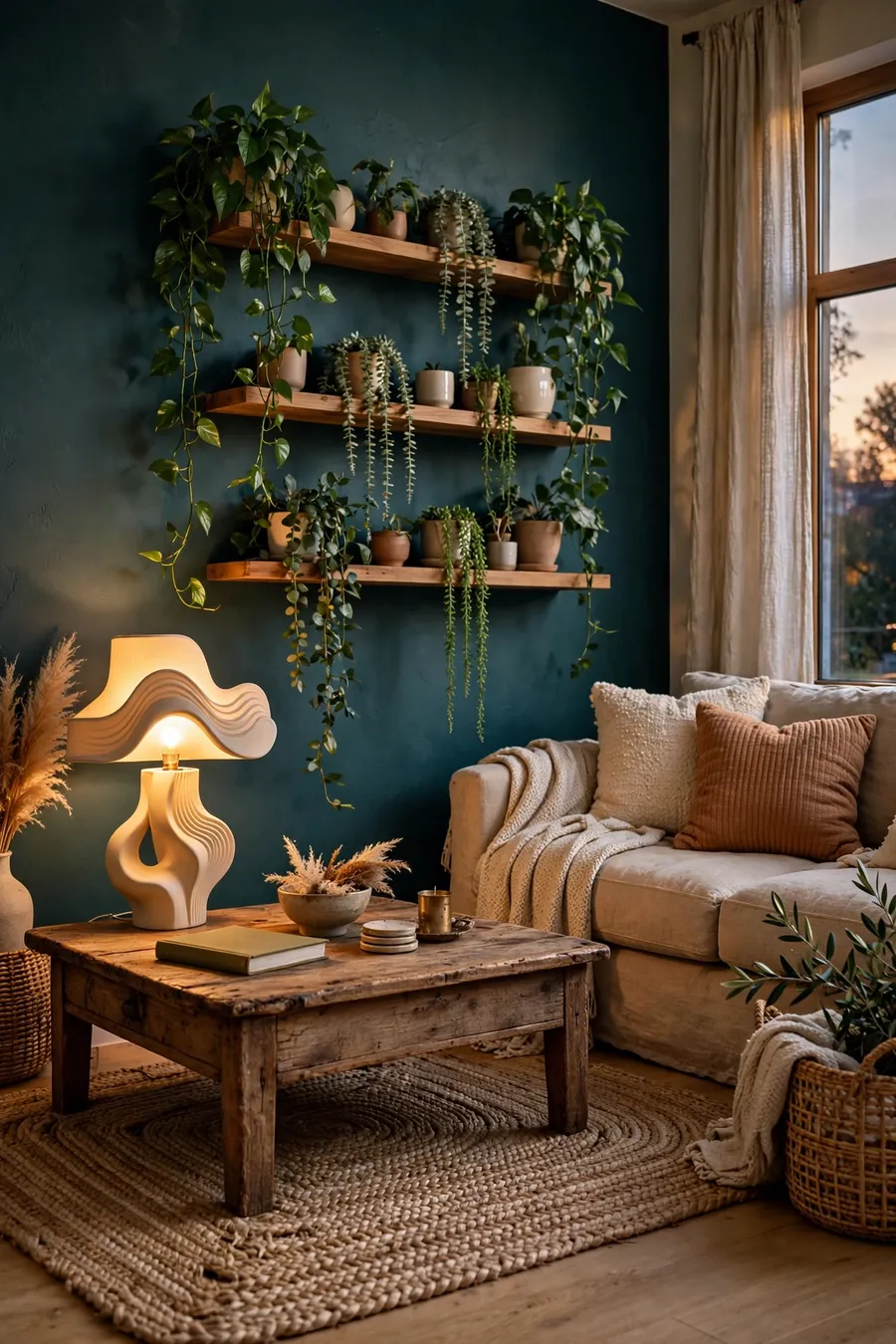
The lowest-risk way into Webster Green: one wall, the one behind your sofa. A single gallon ($50–$60 for Benjamin Moore) covers it, and the rest of the room stays as it is. The green reads as a backdrop that makes whatever sits in front of it look intentional. Hang a cream or natural-fiber piece of art on it — the contrast does all the decorating for you.
2. Go Full Color Drenching
If you have a room with good natural light, paint walls, trim, and ceiling all in Webster Green — color drenching is one of the strongest living room trends right now, and a historical green takes to it beautifully. The trick is finish: use eggshell on walls and the same color in semi-gloss on trim so the details catch light differently. Skip this in north-facing rooms; low light plus full dark green can turn a room into a cave.
Pro tip: Buy the sample pint first ($12–$15) and paint a 2×2 foot swatch on two different walls. Dark greens shift dramatically between morning and evening light — what looks rich at noon can look almost black at 7 p.m. Live with the swatch for two days before buying gallons.
3. Cream Upholstery Against the Green
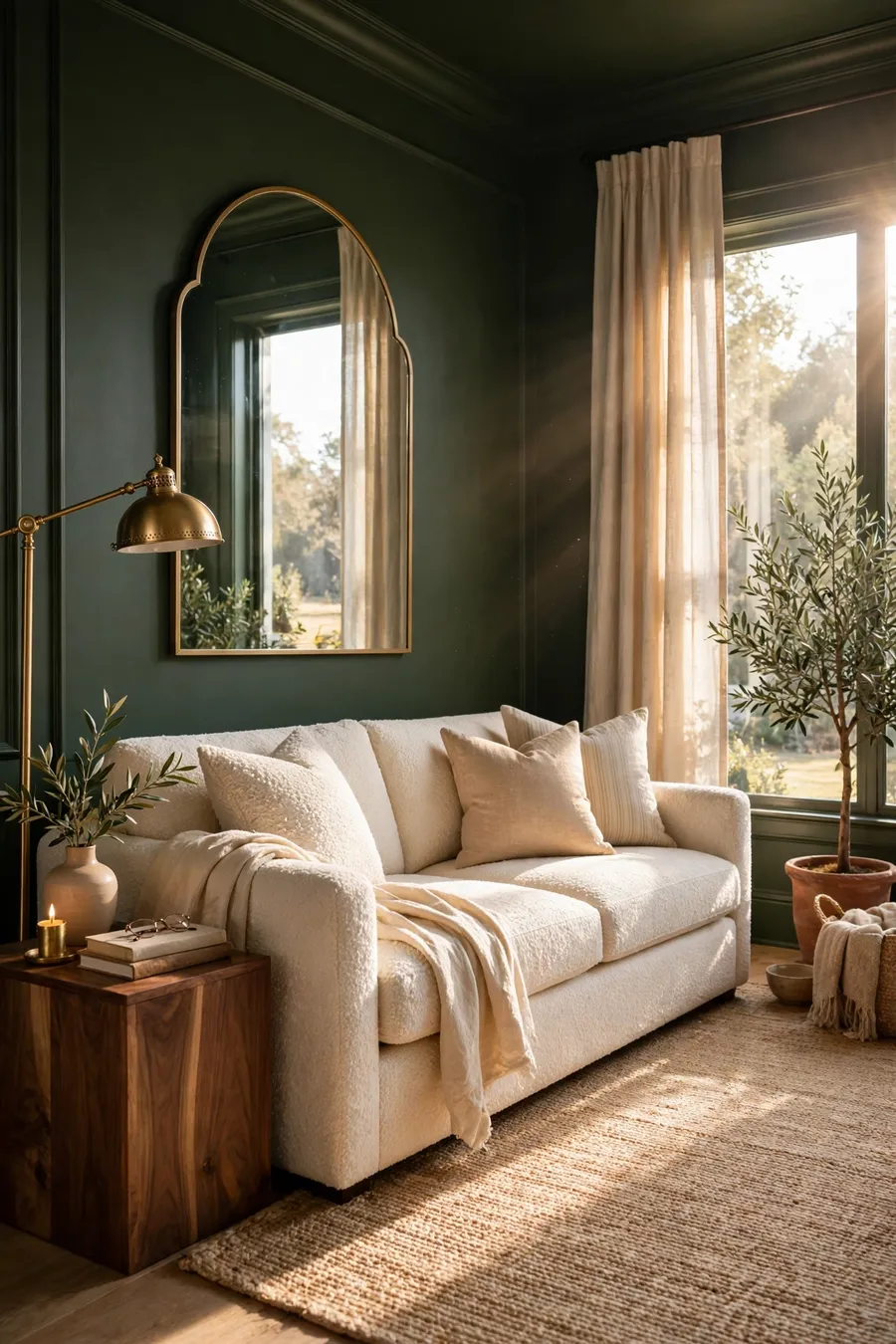
Webster Green needs a foil, and cream is it. An off-white sofa, cream linen curtains, or even a cream slipcover over what you already own will make the green walls look brighter and the furniture look crisper. The contrast is high enough to feel designed, low enough to stay calm. This is the pairing Benjamin Moore's own stylists lean on, and it works every time.
4. Add Brass for Warmth
Green and brass are old friends. A brass floor lamp, brass picture frames, or even $10 brass candlesticks from a thrift store warm up the green's cool depth. The metal catches lamplight and sparkles against the dark wall — it's the fastest way to make a green room feel lit from within. Avoid chrome here; it fights the green's warmth instead of feeding it.
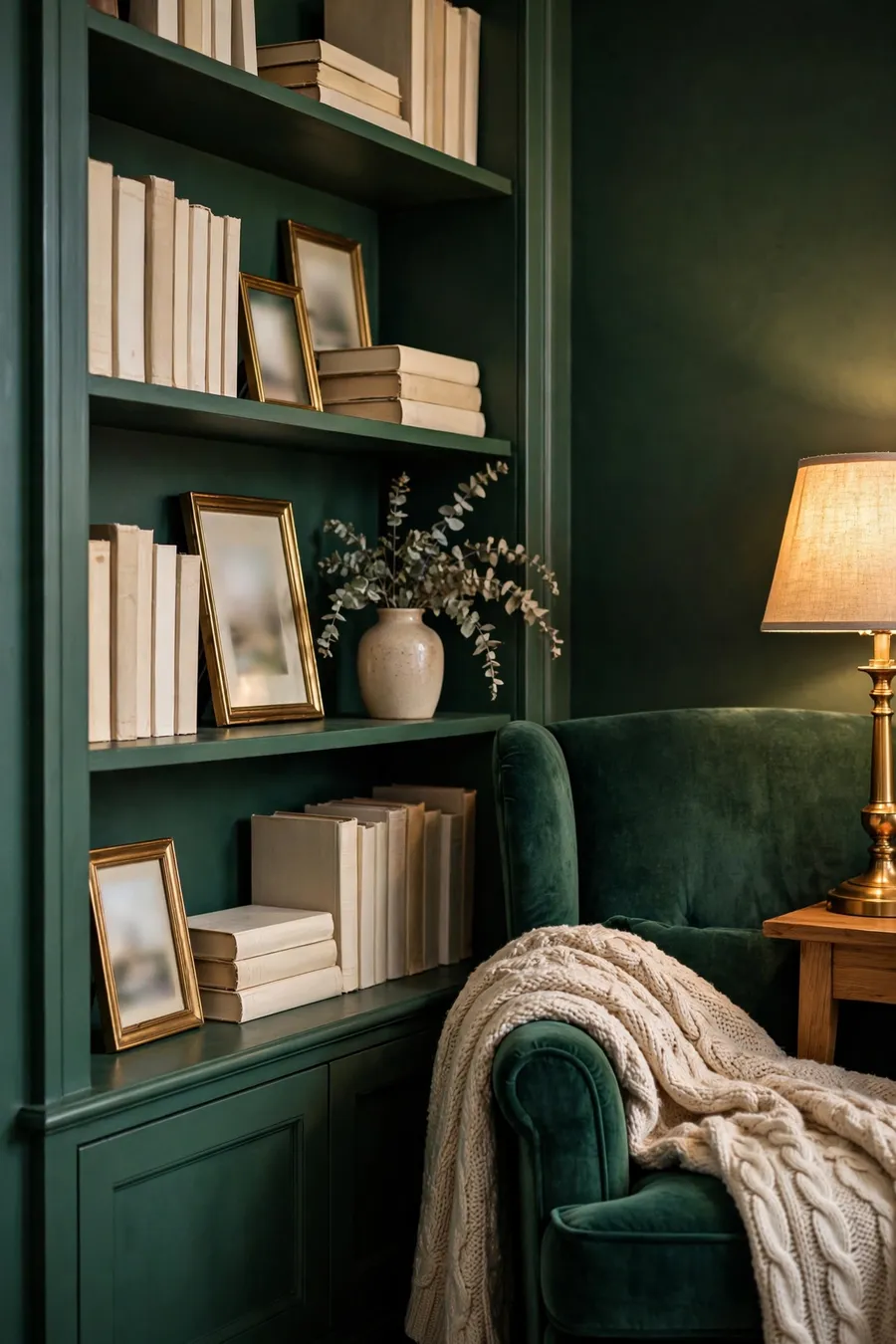
5. Style a Green Bookshelf Wall
Paint the back panel of a bookshelf (or the alcove around built-ins) in Webster Green while leaving the frame white or wood. Books and objects pop against green the way they never do against white — it's the same trick galleries use with dark accent walls. If painting feels permanent, peel-and-stick wallpaper in a deep green gets you 80% of the effect and comes off when you move.
6. Layer in Cognac Leather
One cognac leather chair, ottoman, or even a thrifted leather pouf softens a green room's formality. The warm orange-brown undertones of cognac sit opposite green on the color wheel, so the two colors energize each other without clashing. Vintage leather armchairs run $80–$200 at estate sales and look better every year — a fair price for a piece that anchors the whole room.
Pro tip: Dark green walls eat light, so plan for three light sources minimum: an overhead, a floor or table lamp for reading, and something small like a picture light or candles for evening mood. Use 2700K warm bulbs everywhere — 3000K and up turns Webster Green slightly cold and clinical.
7. Lighten the Floor With a Natural Rug
When the walls go dark, the floor has to lift the room. A jute, sisal, or light wool rug under the seating area keeps the green from feeling heavy — the natural texture also nods to the green's botanical vibe. Size it generously: front legs of all seating on the rug, at least 8×10 feet for a standard living room. A rug that's too small makes dark walls close in faster.
8. Bring in Real Plants
This one's almost unfair — actual greenery against painted green is a match made in a greenhouse. A tall olive tree, a fiddle-leaf fig, or even a shelf of pothos trailings makes the wall color feel like an extension of nature instead of just paint. The leaf textures add the variation a flat dark wall needs. If real plants aren't your thing, a big vase of dried eucalyptus or olive branches lasts months.
9. Try a Green Ceiling
For the brave: paint the ceiling Webster Green and keep the walls cream. It sounds backwards, but a green ceiling reads as a canopy — cozy, enveloping, and it draws the eye up, which makes ceilings feel higher, not lower. This works best in rooms with 9-foot-plus ceilings and a statement light fixture (a brass pendant or rattan shade) to justify the drama. Renters can fake it with a green painted canvas or fabric stretched as a ceiling medallion zone.
10. Echo the Green in Small Doses
Not ready to paint? Carry Webster Green through the room in objects: velvet throw pillows ($25–$40 each), a green wool throw, a framed print with deep green tones, or a green ceramic vase. Pull the shade from the paint deck so every piece matches. A room with four or five green touches reads as intentionally styled even when the walls stay white — and it's completely reversible.
Related ideas
Green rooms are part of a bigger color story. These color-drenched bedroom ideas apply the same full-room paint technique to your sleep space. If you love rich color but want another option, these chocolate brown bedroom ideas explore 2026's coziest neutral. And these warm lighting decor ideas will keep your dark green walls glowing after sunset. For the wider view of what's trending right now, these home decor inspo ideas round up the season's most-loved looks.
Frequently Asked Questions
What is Webster Green?
Webster Green is Benjamin Moore's 2027 Color of the Year, shade HC-130. It's a rich, grounded deep green with warm undertones — sophisticated rather than forest-y — and the brand announced it on October 14, 2026 as part of its 2027 color palette. It sits in the Historical Collection line, so it coordinates with a curated set of classic shades.
Does Webster Green make a living room feel dark or small?
Not if you balance it. Dark green reads as cozy rather than cramped when paired with cream or off-white upholstery, a light rug, and warm lighting around 2700K. In small rooms, painting a single accent wall (the one behind the sofa or fireplace) gives you the drama without closing the space in. Full color drenching suits larger rooms with good natural light.
What colors go with Webster Green?
Cream, warm white, brass, natural oak, and cognac leather are the safest pairings — they warm up the green and keep the room feeling classic. For a bolder look, add muted terracotta, dusty rose, or black accents. Benjamin Moore's Historical Collection whites like Decorator's White or White Dove make the green look fresh instead of heavy.
Is it worth painting my living room the 2027 Color of the Year?
Only if you love the color itself — trends fade, but a shade you genuinely like doesn't. Webster Green has an advantage over flashier yearly picks: it's a classic deep green in the Historical Collection, so it won't look dated the way a neon or pastel pick would. Try it on one wall first; if you still love it after a month, commit to the whole room.